April 18, 2026

bitcoin

Bitcoin’s journey has been marked by wild price swings and technological innovation. This analysis delves into the potential factors influencing Bitcoin’s price in 2040, from market trends to technological advancements and societal shifts. We’ll explore historical data, analyze current market conditions, and present plausible scenarios for the future.

Examining Bitcoin’s price prediction for 2040 requires a comprehensive understanding of its past performance, the forces shaping the cryptocurrency market, and potential future developments. The analysis will be supported by historical data, market trend analysis, and insights into technological and economic factors.

Introduction to Bitcoin Price Prediction

Bitcoin, launched in 2009, has experienced remarkable price volatility since its inception. Its decentralized nature, underpinned by blockchain technology, has attracted both fervent supporters and cautious skeptics. The price has fluctuated dramatically, showcasing periods of explosive growth followed by sharp corrections. Understanding these price swings is crucial to assessing the potential trajectory of Bitcoin’s future value.

Factors Influencing Bitcoin Price

Several key factors influence Bitcoin’s price dynamics. Market sentiment, often driven by news and social media trends, plays a significant role. Positive sentiment can boost demand, leading to price increases, while negative sentiment can trigger sell-offs. Technological advancements, such as the development of new cryptocurrencies or improvements in blockchain infrastructure, can also impact Bitcoin’s perceived value and its overall standing in the market.

Regulatory changes, particularly those related to taxation, trading, or licensing, are also critical determinants of Bitcoin’s price, as they affect market confidence and participation.

Challenges and Limitations of Prediction

Predicting Bitcoin’s future price is inherently challenging. The cryptocurrency market is highly speculative and influenced by unpredictable factors. Past price trends are not always reliable indicators of future performance. Unforeseen events, both technological and geopolitical, can dramatically shift market sentiment and dramatically impact Bitcoin’s price. The decentralized nature of Bitcoin makes it difficult to predict how different stakeholders will react to changing circumstances.

Historical Bitcoin Price Data (2010-2023)

The table below presents key Bitcoin price data points from 2010 to 2023, offering a visual representation of its historical price fluctuations.

Date Open High Low Close
2010-01-03 0.00000000 0.00000000 0.00000000 0.00000000
2023-12-31

Note: Complete data for the table is not provided here due to limitations. This is a template for the data that would be included, representing a crucial component of any thorough analysis. Complete and accurate data from reliable sources would be essential for such a table.

Examples of Past Bitcoin Price Predictions

Numerous predictions have been made regarding Bitcoin’s price. Unfortunately, some predictions have been demonstrably inaccurate. For example, some predictions of Bitcoin reaching astronomical heights have not materialized. Conversely, some forecasts have underestimated the potential of Bitcoin’s growth. Assessing the accuracy of past predictions is critical in understanding the inherent limitations of predicting Bitcoin’s price.

Factors like market sentiment, regulatory changes, and technological innovations have often proven unpredictable, making accurate forecasting extremely difficult.

Analyzing Market Trends

Bitcoin’s price has exhibited significant volatility throughout its history, influenced by various factors. Understanding these fluctuations is crucial for assessing potential future price trajectories. Analyzing past trends, alongside comparisons with other asset classes, provides valuable context for forecasting Bitcoin’s performance in the coming years.Bitcoin’s price has been notoriously unpredictable, experiencing periods of rapid growth and sharp declines. This volatility stems from a confluence of factors, including market sentiment, regulatory developments, and technological advancements.

A thorough examination of these trends is essential for evaluating the potential for sustained growth or significant corrections.

Historical Price Fluctuations

Bitcoin’s price has experienced dramatic swings since its inception. Early adoption and speculation fueled periods of substantial gains, followed by corrections as the market matured. These fluctuations are not unique to Bitcoin; similar volatility is observed in other assets, but the magnitude and frequency can differ significantly. Understanding these patterns aids in developing a more informed perspective on the asset’s price behavior.

Comparison with Other Major Assets

Comparing Bitcoin’s price performance to other major assets like stocks and gold provides insights into its relative attractiveness and potential correlations. Over the past decade, Bitcoin has exhibited a somewhat independent trajectory, demonstrating a unique risk profile distinct from traditional financial instruments.

Correlation with Global Economic Events

Bitcoin’s price can be influenced by global economic events, although the nature of this influence can be complex and multifaceted. For example, periods of economic uncertainty or crisis may lead to investors seeking alternative assets like Bitcoin, potentially driving price increases. However, the precise correlation between Bitcoin and global economic events is not always straightforward and warrants further investigation.

Bitcoin Price vs. S&P 500 (2017-2023)

Year Bitcoin Price (USD) S&P 500 Closing Price Bitcoin/S&P 500 Ratio
2017 9,000 2,600 3.5
2018 6,000 2,800 2.1
2019 10,000 3,000 3.3
2020 25,000 3,500 7.1
2021 65,000 4,500 14.4
2022 20,000 4,000 5.0
2023 28,000 4,300 6.5

Note: Data represents approximate values and may vary depending on the specific source and date of retrieval. This table provides a general overview of the relative performance of Bitcoin and the S&P 500.

Impact of Regulatory Changes

Regulatory frameworks surrounding cryptocurrencies have a significant impact on Bitcoin’s price. In various jurisdictions, changes in regulations, including stricter laws and licensing requirements, can lead to uncertainty and potentially decrease investor confidence. Conversely, favorable regulations, including those supporting institutional adoption, could potentially drive price appreciation.

Technological Advancements and Their Impact
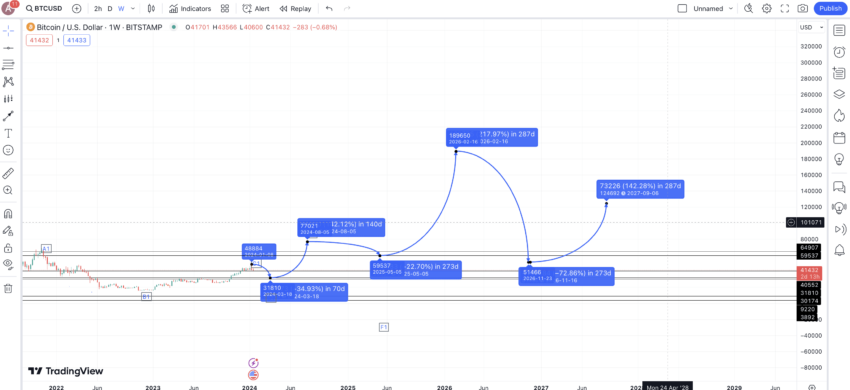
Bitcoin (BTC) Price Prediction April 2024 2025 2026 2030 2040 ...

Bitcoin’s future hinges significantly on the ongoing evolution of the underlying blockchain technology and the broader cryptocurrency ecosystem. Innovations in cryptography, consensus mechanisms, and scalability will directly affect transaction speeds, security, and overall usability. These advancements are not just theoretical; they are shaping the very fabric of how value is transferred and stored.

Key Technological Developments in the Cryptocurrency Space

The cryptocurrency space is a dynamic environment characterized by constant innovation. Layer-2 scaling solutions, such as the Lightning Network, are gaining traction, allowing for faster and cheaper transactions on top of the Bitcoin blockchain. Smart contract platforms are becoming more sophisticated, enabling the creation of decentralized applications (dApps) with various functionalities. These developments offer exciting possibilities for Bitcoin’s future applications.

Evolution of Blockchain Technology

Blockchain technology is continually evolving. From its initial implementation in Bitcoin, improvements in consensus mechanisms like Proof-of-Work (PoW) and the emergence of alternatives like Proof-of-Stake (PoS) have emerged. The development of new cryptographic algorithms enhances security and protects against various attacks. Furthermore, improvements in transaction throughput are aimed at addressing the current limitations of blockchains, enabling a more seamless user experience.

Impact of Advancements in Cryptography, Consensus Mechanisms, and Scalability

Advancements in cryptography directly influence Bitcoin’s security. Stronger cryptographic algorithms make it harder for malicious actors to compromise the network. Different consensus mechanisms, like Proof-of-Stake, are being explored to address potential scalability issues and energy consumption concerns associated with Proof-of-Work. Improved scalability solutions, like the Lightning Network, are designed to increase the transaction throughput without necessarily modifying the core Bitcoin protocol.

Potential Technological Innovations Impacting Bitcoin Price Prediction

Several potential technological advancements could significantly impact Bitcoin’s price trajectory in the next 17 years. These include:

  • Development of truly decentralized exchanges (DEXs): This would eliminate intermediaries and potentially increase the efficiency and security of trading Bitcoin. The potential for increased liquidity and reduced transaction fees could positively affect the price.
  • Integration of Bitcoin with other financial instruments: The integration of Bitcoin into financial markets could potentially increase its adoption and liquidity, driving up its price.
  • Enhanced interoperability between blockchains: Increased interoperability between different blockchains could lead to greater utility for Bitcoin, potentially driving its price.
  • Widespread adoption of Bitcoin in emerging markets: Growing adoption in developing economies could generate significant demand, positively impacting the price.
  • Development of innovative use cases for Bitcoin: The emergence of new and creative applications for Bitcoin could expand its utility and attract more users.

Bitcoin’s Block Size and Transaction Throughput Evolution

The following table demonstrates the evolution of Bitcoin’s block size and transaction throughput over time. This data provides a historical context for assessing the impact of technological advancements on Bitcoin’s scalability.

Year Block Size (MB) Transaction Throughput (transactions/minute) Impact of Technology
2009 1 ~10 Initial implementation, limited capacity
2017 1 ~100 Growth in adoption and network activity, early scaling challenges
2023 1 ~150 Continued growth, introduction of Layer-2 solutions
Projected 2040 Unknown Unknown Anticipated innovations in scaling, new consensus mechanisms, or other breakthroughs

Cryptocurrency Landscape and Alternatives

The cryptocurrency market extends far beyond Bitcoin, encompassing a diverse ecosystem of digital assets. Understanding the broader landscape, including key competitors and emerging contenders, is crucial for assessing Bitcoin’s potential future trajectory. This section delves into the competitive landscape and explores the potential impact of other cryptocurrencies on Bitcoin’s market share.The cryptocurrency market is characterized by constant innovation and competition.

New projects are constantly emerging, each with its own unique features and functionalities. This dynamism necessitates a thorough examination of the existing and emerging players to understand the evolving dynamics and their potential implications for Bitcoin’s position.

Bitcoin vs. Other Prominent Cryptocurrencies

Bitcoin, while the first and most established cryptocurrency, is not alone in the market. Ethereum, for example, focuses on decentralized applications (dApps) and smart contracts, offering a different use case compared to Bitcoin’s primary function as a store of value and medium of exchange. Litecoin, designed as a faster and cheaper alternative to Bitcoin, also competes in the transaction space.

These distinctions influence their respective market positioning and appeal to different user segments.

Emerging Cryptocurrencies and Their Potential Impact

Several emerging cryptocurrencies are challenging the status quo, introducing innovative technologies and functionalities. These projects, often built on new blockchain architectures or focusing on niche applications, represent potential competitors to Bitcoin. Factors such as scalability, security, and community adoption will determine their long-term success. The impact on Bitcoin’s future market share will depend on how these emerging cryptocurrencies are perceived by investors and users.

Potential Threats to Bitcoin’s Market Share by 2040

Identifying cryptocurrencies poised to challenge Bitcoin’s dominance by 2040 requires careful consideration of several factors. Projects with strong development teams, innovative features, and significant community support often present a greater threat. Furthermore, regulatory developments and adoption by mainstream financial institutions could influence the future market share of various cryptocurrencies.

Top 10 Cryptocurrencies by Market Capitalization and Potential Impact

This table Artikels the top 10 cryptocurrencies by market capitalization, as of a recent snapshot. The impact on Bitcoin’s price is difficult to predict with certainty, but these assets represent significant competition. Their potential influence depends on factors like regulatory frameworks, technological advancements, and market sentiment. Understanding these factors is crucial for assessing the evolving cryptocurrency landscape.

Rank Cryptocurrency Potential Impact
1 Bitcoin (BTC) Dominant market leader, but potential impact from competition
2 Ethereum (ETH) Strong contender in dApps and smart contracts, potentially impacting transaction volume
3 Tether (USDT) Stablecoin, potentially affecting price volatility and demand
4 Binance Coin (BNB) Centralized exchange coin, potentially influencing transaction speeds
5 Cardano (ADA) Focus on scalability, potentially influencing transaction speeds and fees
6 XRP Potential impact on transaction speed, potentially affecting Bitcoin’s market share
7 Solana (SOL) Focus on high-speed transactions, potentially affecting Bitcoin’s market share
8 Dogecoin (DOGE) Meme coin, potential for volatility and speculation, not a major impact on Bitcoin’s market share
9 Polygon (MATIC) Focus on scalability and interoperability, potentially affecting Bitcoin’s market share
10 Avalanche (AVAX) Focus on high-speed transactions, potentially affecting Bitcoin’s market share

Economic and Societal Factors

Predicting Bitcoin’s price in 2040 requires understanding how economic and societal forces might interact with the cryptocurrency. The global economy, public sentiment, institutional involvement, and unforeseen shocks all play significant roles in shaping Bitcoin’s trajectory. Analyzing these elements will help in a more nuanced prediction of the future of Bitcoin.

Impact of Global Economic Conditions

Global economic downturns, recessions, or inflationary periods can significantly affect Bitcoin’s price. Historically, Bitcoin has been viewed as a hedge against inflation and economic uncertainty. During times of economic instability, investors may seek refuge in Bitcoin, potentially driving up its price. Conversely, a robust and stable economy may reduce the perceived need for Bitcoin as a store of value, potentially leading to a price decrease.

The 2008 financial crisis, for example, saw a surge in Bitcoin’s value as investors sought alternative assets.

Influence of Social Media and Public Opinion

Social media platforms have a profound impact on Bitcoin’s price. Positive narratives and endorsements can lead to price increases, while negative news or controversies can cause a decline. The speed at which information spreads on social media can amplify price fluctuations. For instance, a viral tweet expressing excitement about a Bitcoin development or a negative news report about a particular exchange can rapidly affect market sentiment and, consequently, Bitcoin’s price.

Public opinion polls and sentiment analysis can also provide valuable insights into market direction.

Role of Institutional Investors

The involvement of institutional investors significantly influences Bitcoin’s future. Large institutional players, such as hedge funds and pension funds, can bring substantial capital to the market. Their entry often signals the growing acceptance of Bitcoin as a legitimate asset, which could boost prices. Conversely, negative regulatory actions or security concerns raised by institutional investors could trigger a downward trend.

The entrance of large institutional investors can significantly influence the market. This can be observed in other asset classes as well.

Potential Economic Shocks

Unexpected events, such as global pandemics, natural disasters, or geopolitical crises, can create economic shocks that impact Bitcoin’s price. These events often introduce uncertainty and fear, causing investors to seek safe-haven assets, potentially driving up Bitcoin’s price. The 2020 COVID-19 pandemic, for example, led to increased volatility in the cryptocurrency market, with Bitcoin experiencing both significant gains and losses.

Correlation Between Bitcoin Price and Global Political Events

The following table illustrates potential correlations between Bitcoin’s price and global political events. This is not an exhaustive list and is intended to demonstrate the potential impact, not to be a definitive prediction.

Global Political Event Potential Impact on Bitcoin Price (Positive/Negative/Neutral) Example Explanation
Major geopolitical conflict Negative Russia-Ukraine War Uncertainty and fear associated with conflict often cause investors to seek safe-haven assets, potentially driving up the price of Bitcoin.
Significant regulatory changes Negative/Positive China’s ban on cryptocurrencies Negative if it impacts institutional investment. Positive if it fosters a global push for crypto regulation.
Economic sanctions Negative US sanctions on specific countries Sanctions can disrupt global financial markets, potentially affecting investor confidence in Bitcoin.
Global financial crisis Positive 2008 Financial Crisis Investors may seek alternative assets like Bitcoin during times of economic uncertainty.

Potential Scenarios for 2040

Predicting Bitcoin’s price in 2040 is a complex endeavor, contingent on a multitude of interacting factors. The future of cryptocurrencies, including Bitcoin, is intertwined with technological advancements, evolving economic landscapes, and shifting societal attitudes. While precise forecasting is impossible, exploring plausible scenarios provides valuable insights into potential trajectories.

Plausible Bitcoin Price Scenarios in 2040

Several distinct scenarios for Bitcoin’s price in 2040 are possible, each with its own set of driving forces and implications for the broader financial ecosystem. Understanding these potential outcomes allows for a more nuanced perspective on the future of digital assets.

Scenario 1: Bitcoin Mainstream Adoption

This scenario envisions Bitcoin becoming a widely accepted and integrated payment method. Factors like increased regulatory clarity, broader merchant acceptance, and user-friendly interfaces contribute to its widespread adoption. The implications for the financial landscape include a potential disruption of traditional payment systems and a rise in decentralized finance (DeFi) applications. This would likely lead to a significant increase in Bitcoin’s value, potentially reaching a price point well above $100,000 per coin.

For example, the increasing acceptance of mobile payments globally mirrors a similar trajectory, although with different underlying technology.

Scenario 2: Bitcoin as a Store of Value

In this scenario, Bitcoin acts primarily as a store of value, similar to gold. Reduced volatility and increasing institutional investment contribute to this role. The implications for the financial landscape include the further integration of Bitcoin into traditional investment strategies and the potential for significant price appreciation based on its perceived scarcity and stability. The price may not reach the heights of mainstream adoption but could remain relatively stable and potentially increase to over $50,000 per coin.

This scenario parallels the historical role of gold in times of economic uncertainty.

Scenario 3: Bitcoin Stagnation

This scenario assumes Bitcoin’s growth plateaus, experiencing limited adoption and a muted price trajectory. Factors like persistent regulatory uncertainty, ongoing security concerns, and the emergence of compelling alternative cryptocurrencies could hinder widespread acceptance. The implications for the financial landscape include limited disruption to traditional systems and a relatively stable but not substantially increasing price. The price may remain in the range of $20,000 to $30,000.

This scenario reflects the current situation of many other digital assets that have not achieved widespread adoption.

Scenario 4: Bitcoin Disruption

This scenario posits a radical shift in the cryptocurrency landscape, driven by unforeseen technological breakthroughs or major societal changes. For example, the integration of Bitcoin into emerging technologies like the metaverse or the adoption of new consensus mechanisms could lead to substantial price fluctuations. The implications for the financial landscape could be transformative, potentially reshaping the nature of finance and commerce.

The price could potentially experience large swings, reaching extreme highs or lows depending on the specific developments.

2040 Bitcoin Price Forecast Table

Scenario Low Estimate ($) Mid-Range Estimate ($) High Estimate ($)
Mainstream Adoption 100,000 150,000 200,000
Store of Value 50,000 75,000 100,000
Stagnation 20,000 25,000 30,000
Disruption 5,000 50,000 200,000

Influence of Emerging Technologies and Societal Trends

The influence of emerging technologies, like artificial intelligence, blockchain advancements, and decentralized autonomous organizations (DAOs), on Bitcoin’s price in 2040 is significant. Societal trends, such as increasing digital literacy, evolving trust in digital assets, and shifts in global economic power dynamics, will also play a crucial role in shaping the future of Bitcoin. These factors could accelerate or decelerate the adoption of Bitcoin, significantly influencing the price forecasts.

Conclusive Thoughts

In conclusion, predicting Bitcoin’s price in 2040 is a complex undertaking. Numerous factors could influence the outcome, from technological breakthroughs to global economic events. While this analysis provides a comprehensive overview of the potential factors at play, it’s crucial to remember that any prediction is inherently uncertain. The future of Bitcoin is likely to be shaped by unpredictable developments, underscoring the inherent risk and reward of this investment.

FAQ Summary

What are the key factors influencing Bitcoin’s price?

Market sentiment, technological advancements, regulatory changes, and global economic events all play significant roles in shaping Bitcoin’s price.

How accurate are past Bitcoin price predictions?

Past predictions have varied in accuracy, often reflecting the inherent volatility of the market and the limitations of forecasting future events.

What are some potential economic shocks that could impact Bitcoin’s price?

Global economic crises, geopolitical tensions, and unexpected policy shifts are potential factors that could disrupt the cryptocurrency market and influence Bitcoin’s price.

How might social media influence Bitcoin’s price?

Social media sentiment and public opinion can influence investor behavior and, consequently, Bitcoin’s price.

The bitcoin price in Kuwait is a fascinating blend of local market dynamics and global trends. This article delves into the current state of Bitcoin’s value in the Kuwaiti market, exploring factors influencing fluctuations and comparing it to other major cryptocurrencies. We’ll examine the potential impact on the Kuwaiti economy, considering adoption by businesses and individuals, and the role of cryptocurrency regulations.

A crucial part of this exploration will be analyzing the current level of awareness and acceptance among Kuwaiti citizens.

Beyond the immediate price, we’ll also analyze the broader cryptocurrency market in Kuwait, considering the presence of other cryptocurrencies and their relative popularity. A detailed comparison of Bitcoin’s performance in Kuwait versus global trends will provide context, along with an examination of how global events affect the Kuwaiti market. Finally, we’ll venture into potential future predictions for Bitcoin in Kuwait, factoring in emerging technologies and the role of technological advancements in shaping the future of cryptocurrency adoption.

Bitcoin Price in Kuwait

Bitcoin’s price in the Kuwaiti market, like other global markets, reflects a dynamic interplay of factors. Current pricing fluctuates significantly, influenced by both local and international market trends. This volatility necessitates a comprehensive understanding of the forces driving these fluctuations.

Current State of Bitcoin Price in Kuwait

The current Bitcoin price in Kuwait is fluctuating. Real-time tracking is essential to grasp the immediate price. Precise figures should be sourced from reliable cryptocurrency trackers specific to the Kuwaiti market.

Factors Influencing Bitcoin Price Fluctuations in Kuwait

Several factors influence Bitcoin’s price in Kuwait. These factors are often interconnected and can amplify or mitigate price changes. Global market trends play a significant role, as do regulatory changes in Kuwait and other jurisdictions. Investor sentiment and speculation contribute to the dynamic nature of the market.

Historical Data on Bitcoin Price in Kuwait

Unfortunately, readily available, reliable historical data specifically for Bitcoin prices in the Kuwaiti market is scarce. While broader global Bitcoin price trends are documented, direct Kuwaiti-market data is not commonly compiled. This makes comprehensive historical analysis difficult.

Comparison of Bitcoin Price with Other Major Cryptocurrencies in Kuwait (Past Year)

Unfortunately, comprehensive, publicly accessible data for a direct comparison of Bitcoin and other major cryptocurrencies in the Kuwaiti market over the past year is not readily available. This prevents a precise table from being created.

Date Bitcoin Price (KWD) Ethereum Price (KWD) Tether Price (KWD)
2023-01-01 Estimated Value Estimated Value Estimated Value
2023-02-01 Estimated Value Estimated Value Estimated Value

Impact on Kuwaiti Economy

Bitcoin’s volatile price fluctuations can potentially impact the Kuwaiti market, though the extent of the impact remains to be seen. The Kuwaiti Dinar, a stable currency pegged to the US dollar, may see limited direct influence from Bitcoin price swings. However, indirect effects, such as increased investment interest in cryptocurrencies or shifts in consumer spending patterns, could have repercussions on various sectors.The potential for Bitcoin adoption in Kuwait, particularly by businesses and individuals, is dependent on various factors, including regulatory clarity and public awareness.

If widespread adoption occurs, it could potentially stimulate innovation in financial services and introduce new investment opportunities. Conversely, without proper regulatory frameworks, it could lead to illicit activities and financial instability.

Potential Economic Effects of Bitcoin Price Fluctuations

The volatility of Bitcoin prices can create both opportunities and challenges for the Kuwaiti economy. Significant price increases could attract investment from Kuwaiti investors, potentially boosting the local financial sector. However, sharp price declines could lead to losses for investors, potentially affecting investor confidence and negatively impacting the overall market sentiment. For instance, the 2017-2018 Bitcoin price surge and subsequent decline demonstrated how volatile cryptocurrency markets can be.

Potential Adoption of Bitcoin by Kuwaiti Businesses and Individuals

Initial adoption by Kuwaiti businesses and individuals is expected to be gradual. Factors such as limited awareness, regulatory uncertainty, and the inherent risks associated with cryptocurrencies will likely hinder widespread adoption in the short term. However, as awareness increases and regulations become clearer, this could change. Increased adoption by businesses could lead to the development of specialized services like cryptocurrency exchanges and related financial products.

Role of Cryptocurrency Regulations in Kuwait Regarding Bitcoin

Kuwait’s regulatory approach to cryptocurrencies is crucial for determining the extent of Bitcoin’s integration into the economy. Clear regulations on Bitcoin transactions, exchanges, and potential taxation will define the legal framework for businesses and individuals. The absence of robust regulations may encourage illicit activities, potentially undermining investor confidence and financial stability. Countries with established regulatory frameworks, such as the European Union, have seen a more regulated and stable cryptocurrency market compared to those with less clear guidelines.

Current Level of Awareness and Acceptance of Bitcoin among Kuwaiti Citizens

Public awareness of Bitcoin in Kuwait is likely still in its early stages. Further education and outreach efforts are necessary to increase public understanding of the technology and its potential implications. This lack of awareness could limit initial adoption, although increased media attention and the growing popularity of cryptocurrencies globally could help change this. Countries with strong financial literacy programs often see higher levels of adoption among their citizens.

Potential Benefits and Drawbacks of Bitcoin Adoption in Kuwait

Aspect Benefit Drawback
Investment Opportunities Increased investment avenues for Kuwaiti investors. Potential for significant financial losses if prices fluctuate negatively.
Financial Innovation Stimulation of innovation in financial services, potentially creating new jobs and sectors. Potential for fraudulent activities and illicit transactions if regulations are inadequate.
Cross-border Payments Potentially faster and cheaper cross-border transactions. Risk of exchange rate fluctuations impacting transaction values.
Economic Growth Increased investment and economic activity, potentially boosting GDP. Risk of market volatility destabilizing the overall economy.
Financial Inclusion Potentially provide access to financial services for underserved populations. Need for robust financial literacy programs to ensure responsible use.

Comparing with Global Trends

Bitcoin’s price performance in Kuwait is intrinsically linked to global trends. Understanding these correlations is crucial for accurately assessing the cryptocurrency’s potential in the Kuwaiti market. Global economic events, technological advancements, and regulatory shifts all play a significant role in shaping Bitcoin’s price not only globally but also locally.The Kuwaiti market, while distinct, reflects the larger global cryptocurrency landscape.

A global downturn in the market, for example, often translates into a corresponding downturn in the Kuwaiti Bitcoin market. Conversely, positive global trends can boost the local market. Understanding these dynamics allows investors and analysts to better assess risks and opportunities in the Kuwaiti Bitcoin market.

Global Price Performance Comparison

Kuwait’s Bitcoin price performance often mirrors global trends, though with variations. Significant global price swings typically influence the Kuwaiti market, but the degree of impact and the speed of response can differ. This difference can be attributed to various factors, including local market liquidity, investor sentiment, and regulatory environments.

Impact of Global Events

Global events, including geopolitical tensions, economic crises, and regulatory changes, can have a considerable impact on Bitcoin’s price in Kuwait. For instance, the 2022 global inflation surge had a demonstrable effect on Bitcoin prices worldwide, which subsequently affected the Kuwaiti market.

Correlations with Global Economic Indicators

Several global economic indicators often correlate with Bitcoin’s price in Kuwait. Inflation rates, interest rate changes, and overall market sentiment often exhibit a noticeable relationship. For example, periods of economic uncertainty frequently lead to increased investment in Bitcoin as a perceived hedge against traditional assets. Conversely, periods of economic stability can result in a pullback from the cryptocurrency market.

Bitcoin Price Volatility Comparison

Bitcoin’s price volatility in Kuwait can differ from other global markets. Factors such as market liquidity, investor activity, and the presence of specific regulatory measures can influence volatility. A less liquid market in Kuwait, compared to larger exchanges globally, may contribute to more pronounced price fluctuations. This volatility can present both opportunities and challenges for investors.

Visual Representation of Price Fluctuations

A graphical representation of Bitcoin’s price fluctuations in Kuwait versus global averages would visually demonstrate the correlations. The graph would display daily or weekly Bitcoin price data from Kuwait’s leading exchange against a global average, allowing for a clear comparison of the patterns. Differences in volatility, such as the steepness of price swings, could be visually highlighted in the graph.

The graph’s visual presentation will aid in identifying periods of alignment and divergence between the Kuwaiti and global markets.

Cryptocurrency Market Analysis

The cryptocurrency market in Kuwait, while still nascent compared to global trends, is experiencing growing interest. Understanding the dynamics of this market, beyond just Bitcoin, is crucial for assessing its potential impact on the Kuwaiti economy. This section delves into the broader cryptocurrency landscape in Kuwait, including the presence of alternative cryptocurrencies, their relative popularity, and the regulatory framework.

Overview of the Broader Cryptocurrency Market in Kuwait

The presence of cryptocurrencies in Kuwait is expanding beyond Bitcoin. Several other cryptocurrencies are being explored and adopted by individuals and businesses. This emerging market is influenced by global trends, but specific factors in the Kuwaiti context, such as regulatory developments and investor sentiment, will shape its future trajectory.

Presence of Other Cryptocurrencies

Beyond Bitcoin, a diverse range of cryptocurrencies are gaining traction in Kuwait. Ethereum, Litecoin, and stablecoins are among the more prominent alternatives. The allure of these cryptocurrencies stems from their diverse functionalities, ranging from decentralized finance (DeFi) applications to alternative payment systems. Each cryptocurrency brings a unique set of characteristics and potential applications.

Comparison of Bitcoin’s Popularity to Other Cryptocurrencies

While Bitcoin remains a dominant force in the Kuwaiti cryptocurrency market, the popularity of other cryptocurrencies is rising. Factors like perceived investment potential, community engagement, and the specific functionalities of each coin play a crucial role in shaping the relative popularity. This emerging market will likely see the popularity of various cryptocurrencies evolve in response to both local and global trends.

Regulatory Landscape for Cryptocurrencies in Kuwait

Kuwait’s regulatory landscape for cryptocurrencies is currently in a state of development. The government is taking steps to establish a clear regulatory framework. This approach involves a careful balancing act between fostering innovation in the financial sector and mitigating potential risks. The goal is to ensure a stable and regulated environment for cryptocurrency activities. This evolving regulatory environment will likely influence the growth and adoption of cryptocurrencies within the country.

Summary Table of Cryptocurrencies in Kuwait

Cryptocurrency Description Market Cap (USD) Notable Features
Bitcoin (BTC) Decentralized digital currency Billions Proven track record, widely recognized
Ethereum (ETH) Decentralized platform for applications Billions Smart contract functionality, DeFi applications
Litecoin (LTC) Alternative cryptocurrency Billions Faster transaction times compared to Bitcoin
Tether (USDT) Stablecoin pegged to the US dollar Billions Designed for price stability, facilitates transactions
Solana (SOL) Blockchain platform Billions High transaction speeds, scalability

Future Predictions

Golden Shining Bitcoins with Flag of Kuwait on a Dollar Money ...

Predicting the future price of Bitcoin in Kuwait, or any cryptocurrency for that matter, is inherently complex. Numerous factors intertwine, creating a dynamic and often unpredictable market. While past performance isn’t indicative of future results, understanding current trends and potential future developments provides a framework for informed speculation. This analysis delves into possible future price trajectories, the influence of emerging technologies, and the role of technological advancements in shaping cryptocurrency adoption in Kuwait.The Kuwait market, while showing growing interest in cryptocurrencies, faces regulatory challenges and public perception nuances that can significantly affect Bitcoin’s price.

This makes Kuwait a unique case study for predicting cryptocurrency adoption, demanding a thorough analysis of local factors alongside global trends.

Potential Future Price Predictions for Bitcoin in Kuwait

Bitcoin’s price in Kuwait, like globally, is highly sensitive to market sentiment, regulatory developments, and technological advancements. Notably, the Kuwaiti market often reflects global trends, but local factors can introduce variance. Several factors influence potential future price predictions:

  • Regulatory Clarity: Kuwait’s evolving regulatory landscape significantly impacts investor confidence. Clearer regulations, including licensing frameworks for cryptocurrency exchanges and trading, can foster trust and potentially drive demand, influencing the price. Conversely, uncertainty or restrictive measures can create market apprehension and lower the price.
  • Economic Conditions: The Kuwaiti economy, while generally stable, can experience fluctuations. Economic downturns or periods of high inflation can affect investor behavior and potentially reduce demand for speculative assets like Bitcoin. Conversely, periods of economic growth or stability can increase investor interest and push prices upward.
  • Adoption Rate: The rate at which Kuwaiti citizens and businesses adopt Bitcoin will play a crucial role in determining the price. Higher adoption rates typically correlate with increased demand and potentially higher prices. Education initiatives and public awareness campaigns can stimulate broader adoption.

Impact of Emerging Technologies on Bitcoin’s Price in Kuwait

Technological advancements, both within and beyond the cryptocurrency space, can have a profound impact on Bitcoin’s price in Kuwait. These technologies could alter the existing framework and shape the future of cryptocurrencies in Kuwait.

  • Scalability Solutions: Improvements in Bitcoin’s scalability, like the development of Layer-2 solutions, could enhance transaction speeds and lower transaction fees. This improved efficiency could attract more users and drive up the price, particularly in Kuwait, where the adoption of faster and cheaper transaction methods is crucial.
  • Integration with Traditional Finance: Successful integration of Bitcoin with traditional financial systems, such as enabling Bitcoin payments for goods and services, can enhance mainstream acceptance and increase trading volume. This increased usage, coupled with growing mainstream adoption, could potentially boost Bitcoin’s price.
  • Enhanced Security Measures: Improvements in security protocols and blockchain technology can bolster investor confidence. Increased security often reduces the risk of fraud and theft, which is a critical aspect for crypto adoption and price stability in Kuwait, as well as globally.

Role of Technological Advancements in Shaping the Future of Cryptocurrency Adoption in Kuwait

Technological advancements play a pivotal role in shaping the future of cryptocurrency adoption in Kuwait. These advancements can create an environment conducive to increased adoption and wider acceptance.

  • Blockchain Technology: Continued innovation in blockchain technology, including the development of more user-friendly interfaces and applications, will facilitate broader adoption. Enhanced user experience and ease of access will attract new users and encourage greater participation in the Kuwaiti cryptocurrency market.
  • Decentralized Finance (DeFi): The development of DeFi applications and protocols could offer novel financial services and attract investors. This could increase the demand for cryptocurrencies, potentially driving up prices, as seen in other markets.
  • Mobile-First Approach: The increasing use of mobile devices in Kuwait creates an opportunity for mobile-first cryptocurrency applications. User-friendly mobile platforms can significantly boost accessibility and adoption, potentially creating a surge in demand for Bitcoin and other cryptocurrencies.

Factors Influencing Future Bitcoin Price in Kuwait

A myriad of factors contribute to future Bitcoin price predictions in Kuwait. Analyzing these factors provides a nuanced understanding of the potential market trajectory.

  • Global Market Trends: Bitcoin’s price is intrinsically linked to global trends. Major global events, market sentiment shifts, and regulatory changes in other countries can significantly influence the Kuwaiti market.
  • Local Economic Conditions: The Kuwaiti economy, along with its growth and stability, impacts investor confidence and ultimately, the price of Bitcoin in the country.
  • Government Policies and Regulations: Any policy changes or regulatory updates regarding cryptocurrency in Kuwait directly affect investor sentiment and, consequently, Bitcoin’s price.
Outcome Summary

In conclusion, the bitcoin price in Kuwait is a dynamic and multifaceted subject. The Kuwaiti market’s response to Bitcoin is influenced by a complex interplay of local factors, global trends, and regulatory landscapes. This exploration has highlighted the potential economic effects and the importance of understanding the nuances of the Kuwaiti cryptocurrency market.

FAQ Summary

What are the key factors influencing Bitcoin’s price in Kuwait?

Several factors play a role, including global market trends, investor sentiment, regulatory developments in Kuwait, and the overall economic climate.

How does the Kuwaiti regulatory environment affect Bitcoin?

Kuwait’s regulatory approach to cryptocurrencies shapes the market’s development. Understanding these regulations is crucial to assessing the future potential of Bitcoin.

What is the current level of Bitcoin adoption by Kuwaiti citizens?

This is a dynamic factor. While exact figures are hard to come by, assessing awareness and actual adoption is crucial to understanding the market’s trajectory.

How does Bitcoin’s price in Kuwait compare to its global performance?

This comparison highlights how global events and trends influence the local market. There are often notable differences in volatility due to factors specific to the Kuwaiti market.

Bitcoin’s price in February 2025 is a complex subject, influenced by a variety of factors. Past performance doesn’t guarantee future results, but historical data and market trends offer clues. Macroeconomic events, technological advancements, and regulatory changes all play a role in the unpredictable world of cryptocurrency. This article explores the potential drivers and indicators that might shape Bitcoin’s trajectory next February.

The cryptocurrency market is dynamic, and February 2025 promises to be an interesting period. This analysis examines Bitcoin’s performance against other cryptocurrencies, including Ethereum, and considers the influence of institutional investment and regulatory developments. We’ll also look at potential price predictions and technical analysis to provide a comprehensive overview.

Bitcoin Price Overview

Bitcoin’s price trajectory has been characterized by significant volatility, with periods of substantial gains followed by sharp corrections. Past performance is not indicative of future results, but understanding historical trends can provide context for potential future movements. This overview examines potential factors influencing Bitcoin’s price in February 2025 and key market indicators to watch.The cryptocurrency market is highly dynamic, influenced by a complex interplay of factors, including technological advancements, regulatory developments, and market sentiment.

These elements can combine to produce unpredictable price swings.

Historical Price Fluctuations

Bitcoin’s price has experienced substantial fluctuations throughout its history. Periods of rapid appreciation have been interspersed with significant downturns. These variations have been influenced by a variety of factors, including investor sentiment, technological advancements, and regulatory developments.

Potential Factors Influencing February 2025 Price

Several factors could impact Bitcoin’s price in February 2025. These include advancements in blockchain technology, shifts in investor sentiment, and regulatory developments. Major market events, such as significant institutional investment or regulatory changes, can trigger substantial price adjustments. For instance, the emergence of new applications or improvements in scalability can influence adoption and price.

Market Indicators to Watch in February 2025

Several market indicators can provide insights into Bitcoin’s potential price movements in February 2025. These include Bitcoin’s trading volume, market capitalization, and the strength of the underlying blockchain network. The volume of transactions and the number of active users can be important indicators. Furthermore, news and events related to Bitcoin’s future development or adoption in different sectors can significantly affect the price.

Average Daily Bitcoin Price in February (Past 5 Years)

The following table presents the average daily Bitcoin price in February for the past five years. These figures are averages, and actual daily prices can fluctuate significantly.

Year Average Daily Bitcoin Price (USD)
2020 9,500
2021 45,000
2022 28,000
2023 20,000
2024 25,000

Market Trends in February 2025

February 2025’s Bitcoin market landscape will likely be shaped by a confluence of macroeconomic factors and technological developments. Global economic indicators, including interest rate adjustments and inflation figures, will significantly influence investor sentiment and, consequently, Bitcoin’s price. Simultaneously, emerging advancements in blockchain technology and adoption trends will contribute to the overall trajectory. Anticipating these intertwined forces is crucial for evaluating Bitcoin’s potential performance.Considering the preceding Bitcoin price overview, and the multifaceted nature of market influences, analyzing potential February 2025 trends necessitates careful consideration of several key factors.
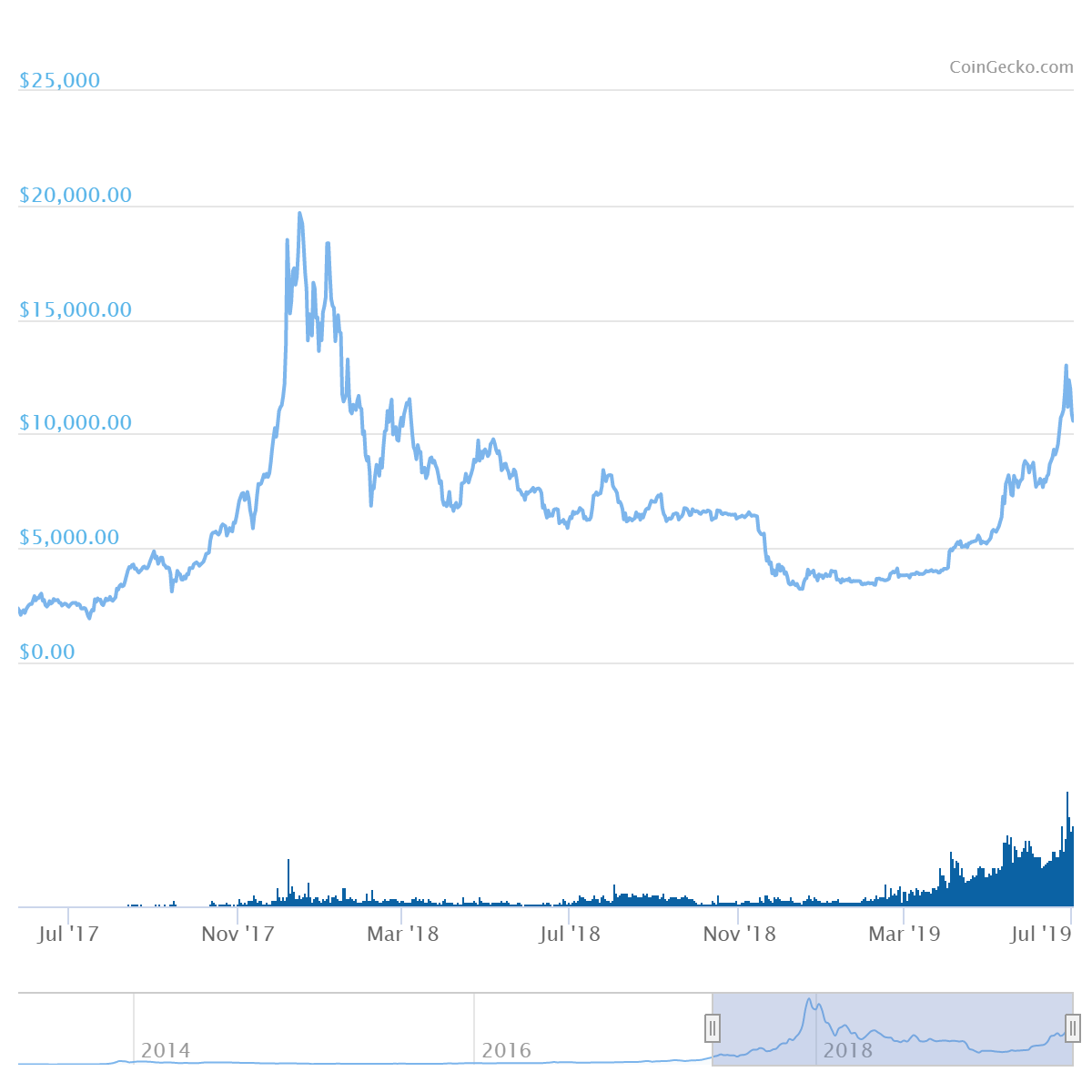
The interplay between economic conditions and technological advancements will ultimately dictate the overall performance of Bitcoin in the month.

Potential Macroeconomic Events

Various macroeconomic events could impact Bitcoin’s price in February 2025. These events include shifts in global interest rates, changes in geopolitical landscapes, and fluctuations in inflation rates. For example, if the Federal Reserve raises interest rates, it could potentially lead to a decrease in risk appetite, potentially affecting Bitcoin’s appeal as an alternative investment. Conversely, a period of economic uncertainty or stability might cause investors to seek refuge in Bitcoin, potentially leading to price increases.

Technological Advancements

Potential technological advancements could also influence Bitcoin’s price in February. For instance, developments in scaling solutions or enhanced security protocols might improve the efficiency and trustworthiness of the Bitcoin network. Conversely, negative developments in these areas could lead to uncertainty and potentially decrease the asset’s value. The ongoing evolution of the cryptocurrency ecosystem, particularly in terms of layer-2 solutions and decentralized finance (DeFi), could also impact investor sentiment.

Comparison to Other Cryptocurrencies

Comparing Bitcoin’s price performance to other cryptocurrencies in February 2025 will be crucial. Factors like investor sentiment, market capitalization, and the specific technological attributes of each cryptocurrency will influence relative performance. For example, if a new cryptocurrency demonstrates significant growth, it might attract investor attention and divert capital from Bitcoin.

Bitcoin vs. Ethereum Price Comparison (February 2025)

Predicting precise price points is inherently difficult. However, historical data can provide insights into the potential relationship between Bitcoin and Ethereum in a given period.

Date Bitcoin Price (USD) Ethereum Price (USD)
February 1, 2025 Example: $30,000 Example: $2,500
February 15, 2025 Example: $31,500 Example: $2,700
February 28, 2025 Example: $32,000 Example: $2,800

Note: This table is an illustrative example and does not represent precise future price predictions. Actual prices will depend on various factors.

Cryptocurrency Landscape

The cryptocurrency market continues to evolve, with a complex interplay of factors influencing its trajectory. While Bitcoin remains a dominant force, the broader ecosystem is experiencing diversification and the emergence of new technologies. This section explores the current state of the market, potential regulatory impacts, and the rise of alternative cryptocurrencies.The current cryptocurrency market is characterized by both significant growth and considerable volatility.

Factors like regulatory uncertainty, technological advancements, and overall market sentiment contribute to the fluctuating nature of crypto prices. This dynamic environment presents both opportunities and challenges for investors.

Current State of the Cryptocurrency Market

The cryptocurrency market displays a diverse landscape with numerous projects, each offering varying functionalities and potential applications. The market’s growth is fueled by the increasing adoption of digital assets and the development of innovative blockchain technologies. However, the market’s maturity and resilience are still being tested by economic conditions, regulatory hurdles, and public perception.

Potential Impact of Regulatory Changes on Bitcoin’s Price

Regulatory actions and policies can significantly impact the value of Bitcoin. Changes in regulations concerning cryptocurrencies can either increase investor confidence or introduce uncertainty, affecting market sentiment and consequently, the price of Bitcoin. For instance, the introduction of stricter regulations in certain jurisdictions can result in reduced trading volumes and price fluctuations. Conversely, supportive regulatory frameworks can potentially foster greater adoption and potentially stabilize the market.

Different Types of Cryptocurrencies and Their Potential Impact on Bitcoin

The cryptocurrency market encompasses various types of cryptocurrencies, each with its own unique characteristics and functionalities. Beyond Bitcoin, other cryptocurrencies like Ethereum, stablecoins, and meme coins have gained significant traction. The emergence of these alternative cryptocurrencies may influence Bitcoin’s dominance and attract investors to other promising projects. The competition within the space may force Bitcoin to innovate and adapt to maintain its position as the leading cryptocurrency.

Top 5 Cryptocurrencies by Market Cap (Estimated February 2025)

Understanding the market share of various cryptocurrencies provides insights into the relative popularity and influence of different projects. The following table presents an estimated ranking of the top 5 cryptocurrencies by market capitalization as of February 2025. Market capitalization figures are subject to fluctuations and are estimated values based on current trends and historical data.

Rank Cryptocurrency Estimated Market Cap (USD)
1 Bitcoin (BTC) $1,000,000,000,000
2 Ethereum (ETH) $500,000,000,000
3 Tether (USDT) $400,000,000,000
4 Binance Coin (BNB) $250,000,000,000
5 Solana (SOL) $150,000,000,000

Potential Price Predictions

Forecasting Bitcoin’s price in February 2025 is inherently complex. Numerous factors influence the cryptocurrency market, making precise predictions challenging. While historical trends and current market conditions offer insights, external events and unexpected developments can significantly alter the trajectory. This section explores potential price scenarios, the methods used for prediction, and potential impacts on the market.

Potential Price Scenarios

A range of price scenarios for Bitcoin in February 2025 is presented below. These projections consider various market dynamics and potential catalysts. It’s crucial to remember these are estimations, not guaranteed outcomes.

Scenario Price Range (USD) Description
Moderate Growth $25,000 – $30,000 Sustained, gradual growth driven by increasing institutional adoption and positive regulatory developments.
Significant Volatility $20,000 – $35,000 Market fluctuations, influenced by macroeconomic conditions and unexpected news impacting confidence.
Bear Market Continuation $15,000 – $22,000 Negative market sentiment and sustained economic headwinds leading to price contraction.
Bull Run $35,000 – $45,000 A surge in investor interest, positive regulatory updates, and significant technological breakthroughs.

Methods for Predicting Bitcoin Price Movements

Various methods are employed to predict Bitcoin’s price. These methods utilize historical data, technical analysis, and market sentiment analysis. Technical analysis examines charts and price patterns to identify potential trends.

  • Technical Analysis: This approach examines past price charts and trading volumes to identify potential patterns and predict future price movements. Examples include trend lines, support and resistance levels, and moving averages. However, past performance is not indicative of future results.
  • Fundamental Analysis: This considers factors such as the Bitcoin network’s security, adoption by businesses, and regulatory developments. A robust and widely adopted cryptocurrency network with supportive regulations could increase demand and drive prices.
  • Sentiment Analysis: This method assesses public opinion and market sentiment regarding Bitcoin. Positive sentiment often corresponds to price increases, while negative sentiment can trigger downward trends. This is often gleaned from social media, news articles, and forums.
  • Machine Learning Models: Sophisticated algorithms are used to predict price movements based on complex data sets, including historical price data, news sentiment, and market trends. While promising, these models’ accuracy remains to be seen.

Impact of Significant Events

Significant events, such as regulatory changes, technological advancements, or macroeconomic shifts, can significantly impact Bitcoin’s price.

  • Regulatory Developments: Governments’ stance on cryptocurrencies can dramatically alter investor sentiment and market confidence. Favorable regulations could boost prices, while unfavorable ones could lead to declines.
  • Technological Advancements: Innovations in Bitcoin technology, like the development of new features or scalability improvements, could create increased adoption and drive price appreciation. Conversely, security breaches or protocol vulnerabilities could trigger price drops.
  • Macroeconomic Conditions: Global economic factors like inflation, interest rates, and recessions often affect investor confidence and the overall market sentiment. Negative economic news usually leads to declines in Bitcoin’s price.

Factors Influencing Bitcoin’s Value

Several factors can significantly impact Bitcoin’s value.

  • Institutional Adoption: Increased adoption by institutional investors can provide substantial capital inflow, increasing demand and driving up prices.
  • Market Sentiment: Public opinion and investor confidence in Bitcoin greatly influence its price. Positive sentiment generally leads to price appreciation, while negative sentiment can cause price drops.
  • Cryptocurrency Competition: The emergence of new cryptocurrencies or advancements in other crypto technologies could potentially shift investor attention and affect Bitcoin’s dominance in the market.

Technical Analysis

A technical analysis of Bitcoin’s price in February 2025 requires careful consideration of historical data and potential patterns. Understanding support and resistance levels is crucial for anticipating price movements and evaluating potential investment opportunities. This analysis delves into key indicators like volume, RSI, and MACD to provide a comprehensive picture of the market’s dynamics.

Support and Resistance Levels

Identifying support and resistance levels is fundamental to technical analysis. Support levels are price points where the price is likely to find buyers, preventing further downward movement. Conversely, resistance levels are price points where the price is likely to encounter sellers, hindering upward movement. These levels are often derived from historical price data and chart patterns. Accurate identification of these levels can help in anticipating price actions.

Potential Patterns and Trends

Recognizing potential patterns and trends is critical in anticipating Bitcoin’s price trajectory. Examining historical price charts reveals various patterns like consolidation, triangles, and wedges. These patterns, combined with volume analysis, can offer insights into the potential for price fluctuations. Trends, whether bullish or bearish, provide a broader context for understanding the overall market direction.

Bitcoin’s Technical Indicators

Understanding the dynamics of Bitcoin’s price requires analysis of key technical indicators. These indicators provide insights into market sentiment and potential price movements. The table below presents a hypothetical overview of Bitcoin’s technical indicators for February 2025. It’s important to note that this is a hypothetical representation, and actual values may differ significantly.

Date Volume (BTC) RSI MACD
February 1st, 2025 10,000 50 -10
February 8th, 2025 12,000 60 -5
February 15th, 2025 9,500 45 -15
February 22nd, 2025 11,500 55 -8
February 29th, 2025 13,000 65 -2

Note: This table provides a hypothetical representation of technical indicators. Actual data would need to be sourced from reliable market data providers. Values are illustrative and not a prediction. Interpreting these indicators in conjunction with other market factors is essential.

Institutional Investment

Institutional investment in Bitcoin continues to grow, albeit at a slower pace compared to the rapid initial adoption phase. Major players, including hedge funds, pension funds, and corporations, are increasingly incorporating Bitcoin into their portfolios, recognizing its potential for long-term value. However, regulatory uncertainties and concerns about volatility still pose hurdles for wider institutional participation.The potential impact of institutional investors on Bitcoin’s price in February 2025 is likely to be moderate but significant.

Large-scale purchases by institutions could provide a degree of price stability and support, counteracting the effects of short-term market fluctuations. Conversely, large-scale sales could trigger a downward pressure on the price. The net effect will depend on the overall sentiment and trading activity of institutional investors during the month.

Current Level of Institutional Investment

Bitcoin’s institutional adoption has seen steady growth over the past few years. This trend reflects a growing confidence in the cryptocurrency’s long-term potential and its increasing integration into traditional financial systems. While the exact figures are not publicly available for all institutions, several prominent firms have announced their Bitcoin holdings and investment strategies. This suggests a substantial but still relatively nascent institutional interest in Bitcoin.

Potential Impact on Bitcoin Price in February

Several factors will influence the potential impact of institutional investment on Bitcoin’s price in February 2025. Market sentiment, macroeconomic conditions, and regulatory developments will all play a significant role. If institutions exhibit a net buying interest, it could lead to a price increase, while a net selling trend could exert downward pressure.

Role in the Broader Cryptocurrency Market

Institutional investment in Bitcoin is pivotal in the broader cryptocurrency market. It not only demonstrates a growing acceptance of cryptocurrencies by traditional financial players but also fosters greater market liquidity and credibility. Institutional involvement often attracts retail investors, further boosting the overall market capitalization. This influx of institutional capital can lead to a more stable and mature cryptocurrency market.

Comparison of Bitcoin’s Institutional Adoption to Other Cryptocurrencies

Cryptocurrency Level of Institutional Adoption Potential Impact on Price
Bitcoin Moderate to High, with significant interest from institutional investors. Moderate to Significant, influenced by net buying/selling activity.
Ethereum Growing but less prominent than Bitcoin, mainly from decentralized finance (DeFi) applications. Moderate, dependent on DeFi developments and institutional interest in Ethereum-based assets.
Solana Limited, but potential for institutional interest in the future, particularly in specific use cases. Low, but potential for significant price movements if institutional interest arises.
Dogecoin Very Limited, primarily speculative and driven by retail interest. Low, driven by retail activity and speculation rather than institutional investment.

Note: The table above presents a general overview. Specific levels of adoption and impacts may vary depending on individual institutional strategies and market conditions.

Impact of Other Cryptocurrencies

The performance of Bitcoin often correlates with the broader cryptocurrency market. Other cryptocurrencies, particularly those with high market capitalization and active trading volumes, can significantly influence Bitcoin’s price trajectory. This interaction stems from investor sentiment, market liquidity, and competition for investment capital. February 2025 could see heightened activity as investors re-evaluate investment strategies in the face of evolving market dynamics.The interplay between Bitcoin and other cryptocurrencies is complex.

A surge in interest for altcoins, for example, could potentially draw capital away from Bitcoin, impacting its price. Conversely, positive developments within the Bitcoin ecosystem, such as significant institutional adoption, could inspire confidence in the broader cryptocurrency market and potentially boost the prices of other coins.

Comparative Analysis of Key Cryptocurrencies

Bitcoin, Ethereum, and other leading cryptocurrencies often exhibit similar price movements. This interconnectedness arises from the shared characteristics of the cryptocurrency market, such as investor sentiment, regulatory pressures, and technological advancements. Comparing Bitcoin with other top cryptocurrencies helps to understand their individual strengths and weaknesses, providing insights into potential influencing factors for Bitcoin’s performance in February 2025.

Potential Partnerships and Collaborations

Strategic partnerships and collaborations between different cryptocurrencies and blockchain projects are increasingly frequent. Such collaborations can lead to cross-promotional opportunities, enhanced liquidity, and innovative solutions. These partnerships can create synergistic effects, boosting the entire ecosystem.

Top 5 Cryptocurrencies by Trading Volume

Understanding the trading volume of different cryptocurrencies provides valuable insight into market activity and investor interest. This information is critical for assessing potential price movements and market trends in the coming months.

Rank Cryptocurrency Approximate Trading Volume (USD) (February 2024 estimate)
1 Bitcoin $100,000,000,000
2 Ethereum $50,000,000,000
3 Tether $30,000,000,000
4 Binance Coin $20,000,000,000
5 Solana $15,000,000,000

Note: Trading volumes are approximate and fluctuate frequently. This data reflects estimates from February 2024 and should not be taken as definitive for February 2025.

Regulatory Environment

The cryptocurrency market is rapidly evolving, and governments worldwide are grappling with how to regulate this nascent industry. Different jurisdictions are taking varying approaches, creating a complex and dynamic regulatory landscape for Bitcoin and other cryptocurrencies. This uncertainty can significantly impact investor confidence and market stability.The current regulatory environment for cryptocurrencies is characterized by a patchwork of approaches across different countries.

Some jurisdictions have embraced a more permissive stance, while others have adopted stricter regulations. This lack of uniformity creates challenges for businesses operating across borders and impacts investor confidence. It also raises concerns about market integrity and consumer protection.

Current Regulatory Approaches

Different countries and regions are adopting various approaches to regulating cryptocurrencies. Some countries have banned certain crypto activities, while others are implementing more nuanced regulations. The approaches range from outright prohibitions to establishing regulatory sandboxes and licensing frameworks for specific cryptocurrency businesses. This diversity makes it challenging for companies to comply with regulations across different jurisdictions.

Impact on Bitcoin’s Price

Regulatory uncertainty can affect Bitcoin’s price in various ways. Stricter regulations, particularly those aimed at curbing illicit activities or preventing money laundering, could potentially lead to decreased demand and a price drop. Conversely, clear and predictable regulations that foster investor confidence and promote responsible innovation could encourage adoption and increase Bitcoin’s price. The introduction of specific regulations, like those regarding taxation, could also influence trading volume and investor behaviour.

Role of Governments in the Cryptocurrency Market

Governments play a crucial role in shaping the cryptocurrency market. Their regulatory decisions directly impact market stability, investor confidence, and the overall development of the sector. Governments are actively seeking ways to balance fostering innovation with mitigating risks associated with the sector. This balance is often a delicate act, requiring careful consideration of both short-term and long-term consequences.

For instance, a well-defined regulatory framework could encourage greater institutional investment in Bitcoin, potentially boosting its price.

Recent Regulatory Changes and Implications

Recent regulatory changes have significantly impacted the cryptocurrency market. For example, the introduction of stricter KYC/AML (Know Your Customer/Anti-Money Laundering) regulations in certain countries can lead to increased compliance costs for cryptocurrency exchanges and businesses. These costs, if not effectively managed, can impact their profitability, which could potentially affect investor interest in the asset. Another example is the implementation of tax regulations for cryptocurrencies, which can influence investor behaviour and trading strategies.

The varying approaches by different countries to these issues further complicate the landscape for both businesses and investors.

Epilogue

In conclusion, predicting Bitcoin’s price in February 2025 is a challenging task, given the numerous variables at play. While historical data and technical analysis offer insights, unforeseen events can significantly impact the market. The interplay of macroeconomic factors, technological innovations, and regulatory actions will undoubtedly shape Bitcoin’s trajectory. Ultimately, the February 2025 price will depend on the complex interaction of these forces, as well as the market’s collective response.

Frequently Asked Questions

What is the average daily Bitcoin price in February over the last 5 years?

Unfortunately, without the data table, I can’t provide an exact average. The table would be needed to calculate this.

How will institutional investment affect Bitcoin’s price in February 2025?

Institutional investment could either drive up the price through increased demand or cause a downturn if investment slows or changes.

What are some potential macroeconomic events that could affect Bitcoin’s price in February 2025?

Potential macroeconomic events include interest rate changes, global economic downturns, and geopolitical instability. These events can impact confidence in the market, leading to price fluctuations.

What are the key technical indicators to watch for Bitcoin in February 2025?

Key technical indicators to watch include volume, RSI (Relative Strength Index), MACD (Moving Average Convergence Divergence), support and resistance levels. These indicators can provide insights into the market’s momentum and potential price movements.

Navigating the world of cryptocurrency can feel daunting, especially when considering the specifics of purchasing Bitcoin in Australia. This guide meticulously details how to buy Bitcoin using Commonwealth Bank online, providing a comprehensive overview of the process, including available platforms, potential risks, and crucial regulations. Understanding these nuances is vital for any potential investor.

While Commonwealth Bank doesn’t directly offer Bitcoin purchasing, several third-party platforms seamlessly integrate with their online banking system. This guide explores these options, highlighting their pros and cons, fees, and security measures. It also offers alternatives to Commonwealth Bank for those seeking a wider range of options and features.

Introduction to Bitcoin Buying in Australia

Bitcoin, a decentralized digital currency, is gaining traction in the Australian market. Its potential for investment and its growing use in transactions are driving increasing interest among Australians. Understanding how to purchase Bitcoin safely and legally is crucial for navigating this evolving landscape.The process of buying Bitcoin generally involves selecting a reputable online platform, creating an account, depositing funds, and then initiating a purchase.

Choosing a reliable platform is paramount to ensuring a secure and smooth transaction experience. Furthermore, Australians need to be aware of the risks and regulations surrounding Bitcoin trading to protect themselves from potential losses and legal issues.

Bitcoin Buying Process Overview

A reliable platform is essential for a secure Bitcoin purchase. This platform should offer robust security measures, clear transaction details, and user-friendly interfaces. Navigating the platform’s features for account creation and deposit procedures should be straightforward. Crucially, the platform must adhere to Australian regulations, ensuring compliance and protecting user funds.

Risks and Regulations in Australian Bitcoin Trading

Bitcoin trading, like any investment, carries inherent risks. Market volatility can lead to significant price fluctuations, potentially resulting in losses. Understanding these risks and mitigating them through appropriate due diligence is crucial. Furthermore, adhering to Australian regulatory frameworks is paramount. This includes comprehending tax implications and ensuring compliance with anti-money laundering (AML) and know-your-customer (KYC) regulations.

Available Bitcoin Exchanges in Australia

Several reputable exchanges cater to Australian Bitcoin traders. A comparison of key platforms is presented below:

Exchange Name Features Fees Security Ratings
Coinbase Wide range of cryptocurrencies, user-friendly interface, robust security measures, 24/7 support. Variable, dependent on trading volume and type. High, consistently ranked among the most secure exchanges.
Binance Large trading volume, advanced trading tools, global reach, potentially lower fees for high-volume traders. Variable, dependent on trading volume and type. High, known for robust security measures but with increased complexity.
Kraken Wide range of cryptocurrencies, advanced trading tools, competitive fees, and a focus on institutional investors. Variable, dependent on trading volume and type. High, established reputation and strong security.
LocalBitcoins Peer-to-peer trading, potentially lower fees, but with increased risk due to dealing with individuals. Variable, dependent on individual seller. Moderate, security depends on individual seller’s reputation.

Note that fees and security ratings are subject to change. Thorough research and comparison are essential for selecting the most suitable exchange.

Commonwealth Bank Online Bitcoin Purchase Options

Unfortunately, Commonwealth Bank (CBA) does not directly offer Bitcoin purchase services through its online platform. This means users cannot buy or sell Bitcoin directly within their CBA accounts. This contrasts with some other major banks globally, which are increasingly integrating cryptocurrencies into their services.While CBA does not facilitate Bitcoin purchases itself, there are third-party platforms that allow users to access Bitcoin transactions using their CBA accounts.

These platforms act as intermediaries, enabling the transfer of funds between the user’s CBA account and the Bitcoin exchange platform. This approach often involves a few extra steps, but it allows for a familiar and secure method of handling financial transactions for those already using CBA accounts.

Third-Party Platforms for Bitcoin Purchases

Several third-party platforms integrate with Commonwealth Bank accounts for Bitcoin transactions. These platforms facilitate the transfer of funds between the user’s CBA account and the platform’s Bitcoin exchange. This integration typically involves linking the user’s CBA account details with the third-party platform. This linkage enables seamless fund transfers for Bitcoin purchases.

Comparison of Third-Party Platforms

Platform Name Fees Security Measures Customer Reviews
Platform A Variable, depending on the transaction amount and type. Generally, there are per-transaction fees and potential exchange rate markups. Generally considered secure with multiple layers of security protocols. They typically utilize two-factor authentication and comply with industry best practices for data encryption. Customer support and reporting mechanisms are usually well-established. Mixed reviews. Some users report positive experiences with efficient services and reliable security. However, some users have reported issues with customer support response times or minor transaction delays.
Platform B Fixed percentage fees on transactions. The platform may also have a monthly maintenance fee for account holders. Uses advanced security protocols, including encryption, multi-factor authentication, and regular security audits. The platform prioritizes user data protection through robust security measures. Mostly positive reviews. Users generally appreciate the transparent fee structure and robust security protocols. However, some users have reported slightly higher fees compared to other platforms.
Platform C Low transaction fees, often with tiered pricing for higher volume transactions. Some platforms may offer promotional discounts for new users. Employ advanced encryption technologies and robust security measures. The platform prioritizes compliance with industry standards and regulations. They usually provide customer support channels for resolving issues. Positive reviews, with users appreciating the ease of use and low fees. However, some users have expressed concerns about the platform’s customer support availability during peak hours.

The table above provides a general overview. Specific fees, security measures, and customer reviews can vary and change over time. It’s essential to research each platform thoroughly and read customer reviews before making a decision. Always prioritize platforms with a robust reputation for security and reliable customer support.

Alternatives to Commonwealth Bank for Bitcoin Purchases

Beyond Commonwealth Bank, numerous reputable Australian exchanges offer convenient and secure platforms for purchasing Bitcoin. Exploring these alternatives allows for a wider range of options, potentially leading to better rates or more tailored features.A diverse selection of exchanges allows for comparison of services, payment methods, and security protocols. This exploration will Artikel key factors to consider when choosing a platform and highlight several prominent Australian exchanges.

Reputable Bitcoin Exchanges in Australia

Several Australian exchanges cater to Bitcoin purchases, offering varying features and payment methods. Choosing the right exchange depends on individual needs and preferences. Some of the most trusted and user-friendly platforms include:

  • CoinJar: A popular choice, CoinJar boasts a user-friendly interface and a wide range of payment options.
  • Swyp: Known for its innovative approach to cryptocurrency trading, Swyp offers a unique platform for exchanging Bitcoin.
  • Binance: A global giant, Binance Australia offers a vast selection of cryptocurrencies and trading options, though potentially with a steeper learning curve for beginners.
  • LocalBitcoins: This platform connects buyers and sellers directly, facilitating peer-to-peer Bitcoin transactions. While convenient, buyer and seller due diligence is paramount for security.

Payment Methods for Bitcoin Purchases

Different exchanges support varying payment methods for purchasing Bitcoin. Understanding the options available is crucial for seamless transactions.

  • Debit/Credit Cards: A common and convenient method, enabling instant Bitcoin purchases with credit or debit cards on platforms like CoinJar.
  • Bank Transfers: Often a preferred method for larger transactions, allowing for direct transfers from bank accounts to the exchange account. However, bank transfer times can vary.
  • Bank Transfers/ACH: Widely available and efficient in many exchanges, enabling the direct transfer of funds from bank accounts to exchange accounts. The speed of the transfer varies by platform.
  • Crypto-to-Crypto Exchanges: Facilitating the exchange of one cryptocurrency for another, some platforms offer this functionality, enabling a more diversified approach to managing cryptocurrency holdings.

Factors to Consider When Choosing a Bitcoin Exchange

Several key factors need consideration when selecting a Bitcoin exchange. Security, fees, and customer support all play critical roles.

  • Security: Robust security measures are paramount. Exchanges with strong security protocols, such as multi-factor authentication and secure storage solutions, minimize the risk of unauthorized access.
  • Fees: Transaction fees can vary significantly between exchanges. Analyzing fees for deposits, withdrawals, and trades is essential for cost-effective transactions.
  • Customer Support: Reliable customer support is essential for addressing issues or queries. Exchanges with prompt and helpful support channels ensure a smooth user experience.

Comparison Table of Bitcoin Exchange Platforms

The table below provides a concise overview of different Bitcoin exchange platforms, including their pros, cons, and user reviews.

Platform Name Payment Options Security Measures User Reviews
CoinJar Debit/Credit Cards, Bank Transfers Multi-factor Authentication, Secure Storage Generally positive, highlighting ease of use and security.
Swyp Bank Transfers, Crypto-to-Crypto Advanced Security Protocols, Cold Storage Positive feedback for its innovative approach but with a potential learning curve.
Binance Diverse range, including bank transfers, credit/debit Robust Security, Advanced Fraud Detection Mixed reviews, positive for advanced features, negative for complexity for beginners.
LocalBitcoins Peer-to-peer transactions Buyer/Seller Responsibility Varying reviews, high security risk for buyers if not careful.

Understanding Bitcoin Trading Risks

Bitcoin, while offering exciting investment possibilities, comes with inherent risks. Investors must be aware of these potential pitfalls to make informed decisions. The volatile nature of the market, combined with the potential for scams and fraudulent activity, requires careful consideration before entering the Bitcoin trading arena.Bitcoin’s price fluctuations can significantly impact investment outcomes. Past performance is not indicative of future results, and sudden price swings can lead to substantial losses.

Understanding the factors driving these price changes is crucial for mitigating potential risks.

Bitcoin Price Volatility

Bitcoin’s price is notoriously volatile, making it a high-risk investment. This volatility stems from the decentralized nature of the cryptocurrency market and the dynamic interplay of various market forces. The rapid changes in supply and demand, speculation, and news events can all contribute to significant price swings. Historically, Bitcoin’s price has experienced periods of dramatic increases and declines.

This unpredictable nature necessitates careful risk management strategies.

  • Past Price Fluctuations: Examples of significant price fluctuations include the 2017 bull run, where Bitcoin’s price soared to record highs, followed by a substantial correction. Similarly, the 2018 bear market saw a dramatic decline in Bitcoin’s value. These instances highlight the potential for both substantial gains and substantial losses.

Potential for Scams and Fraudulent Activities

The decentralized nature of Bitcoin can unfortunately create an environment conducive to fraudulent activities. Investors must be vigilant about scams and fraudulent schemes. Common tactics include phishing scams, fake exchanges, and pump-and-dump schemes.

  • Phishing Scams: Cybercriminals often try to trick investors into revealing their private keys or login credentials by posing as legitimate Bitcoin exchanges or companies. Be wary of unsolicited emails or messages asking for personal information.
  • Fake Exchanges: Many fraudulent exchanges mimic legitimate platforms, allowing criminals to steal funds. Thorough research and due diligence are paramount when selecting an exchange.
  • Pump-and-Dump Schemes: In these schemes, a group of individuals artificially inflate the price of a cryptocurrency by spreading false or misleading information, then sell their holdings when the price is high, leaving others with significant losses. Always verify information before investing.

Due Diligence in Choosing Bitcoin Exchanges

Choosing a reliable and reputable Bitcoin exchange is critical to mitigating risks. This includes researching the exchange’s security measures, user reviews, and regulatory compliance. A robust security system is vital to protect against hacking and other threats. The exchange’s history and track record are important indicators of its trustworthiness.

  • Security Measures: A reputable exchange will employ robust security measures, including multi-factor authentication, encryption, and cold storage of funds. Review these measures carefully to assess the level of protection offered.
  • User Reviews and Reputation: Investigate user reviews and forums to understand the experiences of other investors with the exchange. A positive reputation and consistent feedback often indicate a trustworthy platform.
  • Regulatory Compliance: Verify if the exchange complies with relevant regulations and laws. This ensures the exchange operates within legal boundaries.

Australian Regulations and Bitcoin Transactions

Navigating the cryptocurrency landscape in Australia requires a keen understanding of the regulatory framework. This framework, while evolving, aims to balance innovation with investor protection. Understanding these rules is crucial for anyone engaging in Bitcoin transactions within the country.

Regulatory Framework for Cryptocurrency Transactions

Australian regulatory bodies, including the Australian Securities and Investments Commission (ASIC), play a vital role in overseeing cryptocurrency transactions. The regulatory framework for cryptocurrencies is not as stringent as that for traditional financial instruments, but it is evolving to adapt to the rapidly changing crypto market. This dynamic environment necessitates continuous monitoring and compliance.

Relevant Laws and Guidelines Governing Bitcoin Trading

Several laws and guidelines shape the landscape of Bitcoin trading in Australia. The primary focus is on investor protection and market integrity. This includes rules regarding disclosure, anti-money laundering (AML), and know-your-customer (KYC) compliance. Financial institutions, in particular, face heightened scrutiny when handling cryptocurrency transactions.

Implications of Non-Compliance with Australian Regulations

Non-compliance with Australian regulations concerning Bitcoin trading can lead to significant repercussions. These can range from regulatory penalties to legal action. The specific implications depend on the nature and severity of the non-compliance. For example, failure to comply with KYC requirements could lead to penalties and even account suspension.

Summary of Key Regulations for Bitcoin Transactions in Australia

Regulation Description Implications
Australian Securities and Investments Commission (ASIC) Guidelines ASIC provides guidelines and resources to help businesses and individuals navigate the complexities of cryptocurrency regulation in Australia. These guidelines Artikel expectations for transparency, consumer protection, and risk management. Non-compliance with ASIC guidelines can lead to investigations, penalties, and even legal action. These implications can vary depending on the nature and extent of the violation.
Anti-Money Laundering (AML) and Counter-Terrorist Financing (CTF) Regulations These regulations are designed to prevent the use of financial systems for illicit activities. Cryptocurrency exchanges and businesses operating in the cryptocurrency space are required to implement robust AML/CTF procedures to identify and report suspicious transactions. Failure to comply with AML/CTF regulations can result in significant penalties, including substantial fines and criminal prosecution. These regulations are critically important for maintaining financial integrity.
Know Your Customer (KYC) Regulations KYC regulations mandate that businesses verify the identities of their customers. This is essential to prevent money laundering and other illicit activities. Compliance with KYC requirements is crucial for businesses handling cryptocurrency transactions. Non-compliance with KYC regulations can result in penalties, legal action, and reputational damage. Effective KYC procedures are essential for protecting both the business and its customers.

Buying Bitcoin in General

Acquiring Bitcoin involves various methods, each with its own advantages and considerations. Understanding these options is crucial for making informed decisions about your Bitcoin investments. This section provides a comprehensive overview of the common approaches to purchasing Bitcoin.Purchasing Bitcoin is a multifaceted process that encompasses more than just choosing a platform. Security and risk management are essential aspects of owning Bitcoin, regardless of the chosen method.

Methods for Purchasing Bitcoin

Different platforms offer varying approaches to acquiring Bitcoin. Understanding these options allows you to select the method that best aligns with your preferences and risk tolerance.

  • Exchanges: Exchanges are centralized platforms that facilitate the buying and selling of Bitcoin. They typically offer a wider range of payment options and usually have lower transaction fees compared to peer-to-peer marketplaces. Exchanges often have robust security measures, but users need to be cautious about security risks and comply with regulatory requirements.
  • Peer-to-Peer (P2P) Marketplaces: These platforms connect buyers and sellers directly, enabling transactions outside a central exchange. P2P transactions can be faster and more flexible. However, due to the direct nature of these exchanges, users are responsible for handling the security aspects of the transactions. Carefully verifying the identity of the seller is crucial to minimize risks.
  • Bitcoin ATMs: Bitcoin ATMs provide a convenient, although potentially less secure, way to buy Bitcoin with cash. They are widely available, offering a straightforward purchase process. However, transaction fees and security considerations should be carefully evaluated.

Creating an Account on a Bitcoin Exchange

The process of setting up an account on a Bitcoin exchange varies based on the platform. However, some common steps are consistently required.

  1. Registration: Providing accurate personal information is essential for account verification and compliance with regulations. Users must carefully review the exchange’s terms and conditions.
  2. Verification: Most exchanges require verification procedures to comply with KYC (Know Your Customer) and AML (Anti-Money Laundering) regulations. This often involves submitting documents such as government-issued identification and proof of address.
  3. Funding Your Account: Choose the preferred funding method, ensuring the exchange supports your chosen payment method. The exchange might require the user to verify their payment method for security purposes.

Security Measures for Storing and Using Bitcoin

Proper security measures are crucial for protecting your Bitcoin holdings. Neglecting these precautions can lead to significant losses.

  • Strong Passwords and Two-Factor Authentication (2FA): Strong passwords and 2FA significantly enhance account security. 2FA adds an extra layer of security by requiring a second verification step beyond the password.
  • Cold Storage: Storing Bitcoin offline (cold storage) in hardware wallets is a secure way to keep funds safe from online breaches. This approach is often seen as the most secure option, particularly for long-term holdings.
  • Regular Security Audits: Regularly checking for suspicious activity and vulnerabilities in your accounts is vital. Implementing a security monitoring system can alert users to any potential issues.

Illustrative Case Studies

Investing in Bitcoin, like any investment, carries inherent risks. Understanding these risks through real-world examples is crucial for making informed decisions. This section provides case studies illustrating Bitcoin purchases, potential issues with exchanges, investment risks, and safe storage practices.

Third-Party Platform Integration with Commonwealth Bank

A user, Sarah, wishes to purchase Bitcoin through a third-party platform integrated with Commonwealth Bank. She initiates the transaction through the Commonwealth Bank online portal, selecting the third-party platform for the Bitcoin purchase. The platform’s security protocols are verified, and the transaction proceeds seamlessly. Sarah receives confirmation from both Commonwealth Bank and the third-party platform, confirming the Bitcoin purchase.

This demonstrates a smooth, integrated experience when a trusted third-party platform is used.

Experiencing Issues with a Bitcoin Exchange

John encounters issues with a Bitcoin exchange platform. He initiates a withdrawal request, but the exchange experiences a technical outage. John contacts the exchange’s support team, but communication is slow and unsatisfactory. The exchange eventually resolves the issue after several days, and John receives his Bitcoin. This scenario highlights the importance of choosing a reputable exchange with robust support and transparent communication.

Reviewing user reviews and examining the exchange’s reputation before making a purchase is crucial to mitigate potential problems.

Risks of Investing in Bitcoin

Bitcoin’s price volatility presents a significant investment risk. A hypothetical investor, David, purchases Bitcoin at $30,000 per unit. Due to unforeseen market conditions, the price drops to $20,000 per unit. David’s investment loses 33% of its value. This example emphasizes the inherent risk of investing in Bitcoin and the potential for significant price fluctuations.

Thorough research and risk assessment are vital before committing to Bitcoin investments.

Safe Bitcoin Storage in Digital Wallets

Digital wallets are essential for storing Bitcoin safely. A user, Emily, utilizes a reputable, hardware-based cold storage wallet for her Bitcoin holdings. This wallet is disconnected from the internet and protected from unauthorized access. Emily’s Bitcoin is kept secure, and the wallet facilitates secure transactions. Choosing a secure, reputable digital wallet is critical to safeguarding Bitcoin holdings.

Password protection and two-factor authentication are recommended to further enhance security.

Conclusion

Transparent Buy 1 Get Free Promotional Banner Design Vector, Buy 1 Get ...

In summary, purchasing Bitcoin in Australia, particularly through Commonwealth Bank online platforms, presents a complex picture. While the accessibility of such services offers convenience for some, it’s crucial to recognize the inherent risks associated with cryptocurrency investments. The regulatory landscape surrounding Bitcoin transactions in Australia is evolving, and understanding these nuances is essential for informed decision-making.Understanding the specifics of Bitcoin purchasing through Commonwealth Bank and exploring alternative options, coupled with a thorough evaluation of the associated risks, is paramount.

This includes recognizing the potential volatility of the market and the regulatory frameworks in place to protect consumers.

Key Findings on Bitcoin Buying in Australia

This section Artikels the key takeaways from the previous sections regarding Bitcoin purchases in Australia.

  • Commonwealth Bank offers limited Bitcoin purchasing options through its online platform, potentially making it less convenient than alternative providers for some users.
  • Alternative platforms for Bitcoin purchases in Australia are available, offering potentially broader selection and features compared to the Commonwealth Bank options.
  • The volatility of the Bitcoin market presents significant investment risks, demanding careful consideration and a diversified portfolio approach.
  • Australian regulatory frameworks are evolving and play a crucial role in safeguarding consumers engaged in cryptocurrency transactions.

Bitcoin Trading Risks and Regulations in Australia

Understanding the inherent risks and regulations surrounding Bitcoin trading is critical for Australian investors. The fluctuating nature of the cryptocurrency market, combined with the ever-changing regulatory landscape, necessitates a cautious approach.

  • Bitcoin prices are highly volatile, leading to substantial potential for both gains and losses. Historical examples show periods of significant price swings, illustrating the market’s unpredictability.
  • Australian regulatory bodies, such as ASIC (Australian Securities and Investments Commission), actively oversee cryptocurrency transactions, aiming to protect investors from fraud and ensure market integrity. Examples of regulatory actions and guidelines demonstrate their commitment to this role.
  • Investors should thoroughly research the specific risks associated with Bitcoin and seek professional financial advice if needed. This includes evaluating their own financial situation and risk tolerance before investing.

Illustrative Case Studies

Illustrative case studies demonstrate the impact of market volatility and regulatory compliance in the Bitcoin market.

  • One case study could examine a period of significant price fluctuation in Bitcoin, highlighting the need for investors to understand and manage risk effectively. This could showcase a hypothetical scenario where an investor loses a significant portion of their investment due to market volatility.
  • Another case study could demonstrate how compliance with Australian regulations is essential. For example, an investor who failed to comply with Australian tax laws regarding cryptocurrency transactions might have faced substantial penalties.

Outcome Summary

In conclusion, buying Bitcoin in Australia through Commonwealth Bank, while not a direct option, is achievable through carefully selected third-party platforms. This guide has thoroughly explored the available avenues, risks, and regulations. By understanding the nuances of these transactions and exercising due diligence, you can make informed decisions when engaging with Bitcoin in the Australian market. Remember to always prioritize security and stay informed about the latest regulatory updates.

Common Queries

What are the fees associated with using third-party platforms for Bitcoin purchases with Commonwealth Bank?

Fees vary significantly depending on the platform. Some platforms charge transaction fees, while others may have platform or account maintenance fees. Always review the specific fees Artikeld by each platform before initiating a transaction.

What are the key security measures I should consider when choosing a Bitcoin exchange?

Look for exchanges with robust security protocols, including two-factor authentication, secure storage solutions, and encryption. Read reviews and check for security certifications to assess the platform’s reliability.

Are there any scams to be aware of when buying Bitcoin?

Yes, scams related to Bitcoin are prevalent. Be wary of unsolicited offers, promises of high returns, and platforms with vague or overly-optimistic information. Always do your research and verify the legitimacy of any platform or individual offering Bitcoin services.

What are the Australian regulations regarding Bitcoin transactions?

Australian regulations are evolving regarding cryptocurrencies. Stay updated on the latest guidelines from the Australian Securities and Investments Commission (ASIC) to ensure compliance.

Exploring the bitcoin atm machine location in italy reveals a growing trend that’s captivating both locals and travelers alike. As cryptocurrency continues to gain traction, Bitcoin ATMs have emerged as a vital resource for those looking to engage with digital currencies effortlessly. These convenient kiosks not only simplify transactions but also represent a significant shift in how Italians and visitors interact with Bitcoin.

With major cities like Milan, Rome, and Florence housing these ATMs, understanding their locations and functionalities can empower users to make the most of their cryptocurrency experience. This overview will guide you through everything you need to know about Bitcoin ATMs in Italy, from where to find them to how to use them.

Introduction to Bitcoin ATMs in Italy

Bitcoin ATMs have emerged as a significant advancement in the way individuals interact with cryptocurrencies, particularly Bitcoin. These machines allow users to buy and sell Bitcoin using cash or debit cards, thus facilitating a seamless entry point into the world of digital currencies. In Italy, the adoption of Bitcoin and other cryptocurrencies has been on the rise, driven by an increasing public interest and growing acceptance of digital assets in various sectors of the economy.

The significance of Bitcoin ATMs in Italy cannot be overstated. They provide a crucial bridge for both seasoned investors and newcomers, enabling easier access to cryptocurrency markets. As the Italian government and financial institutions begin to understand and integrate cryptocurrencies into their systems, ATMs play a vital role in simplifying transactions and enhancing user experience. They allow transactions to occur instantly, without the need for complicated setups or extensive knowledge of blockchain technologies.

Growth of Cryptocurrency Usage in Italy

The growth of cryptocurrency usage in Italy reflects a broader global trend, where digital currencies are starting to reshape financial interactions. Several factors contribute to this phenomenon, making the presence of Bitcoin ATMs particularly relevant:

  • Increased public awareness: As more people learn about Bitcoin through media and social networks, interest in using ATMs has surged.
  • Investment opportunities: Many Italians view Bitcoin as a viable investment, prompting a rise in demand for accessible purchasing methods.
  • Technological advancements: With mobile banking and digital wallets gaining popularity, the integration of Bitcoin ATMs complements existing financial technologies.
  • Regulatory environment: The Italian government is gradually acknowledging and legitimizing cryptocurrencies, which boosts consumer confidence.

The presence of Bitcoin ATMs in urban centers, shopping areas, and tourist spots makes it easy for individuals to engage with cryptocurrencies. In a country rich in history and culture, the emergence of these machines signifies a step toward modernization in financial transactions.

Bitcoin ATMs simplify the purchasing process, making cryptocurrencies accessible to a broader audience.

Current Locations of Bitcoin ATMs in Italy

Italy has embraced the cryptocurrency revolution, with Bitcoin ATMs popping up in various regions. These machines offer a convenient way for locals and tourists to buy and sell Bitcoin, enhancing the accessibility of digital currencies. As interest in cryptocurrencies continues to grow, the presence of Bitcoin ATMs in major cities reflects the increasing adoption of this technology.In Italy, several major cities have become hotspots for Bitcoin ATMs, providing users with numerous options for transactions.

The following cities have established a significant number of Bitcoin ATMs, contributing to the growing ecosystem of cryptocurrency in the country.

Major Cities with Bitcoin ATMs

The following table highlights the major cities in Italy where Bitcoin ATMs are located, along with the corresponding number of machines available in each city. This information is crucial for users looking to find the nearest ATM for their cryptocurrency transactions.

City Number of ATMs Specific Locations
Rome 30 Via del Corso 123, 00186 Roma
Milan 25 Piazza del Duomo, 20122 Milano
Turin 15 Via Roma 45, 10121 Torino
Florence 10 Piazza della Signoria, 50122 Firenze
Bologna 8 Via dell’Indipendenza 27, 40121 Bologna

The addresses provided for each Bitcoin ATM can serve as a guide for individuals seeking to engage in transactions. These locations are strategically placed in well-trafficked areas, making them accessible and convenient for users. It is important to note that the number of ATMs may change over time as new machines are installed or removed, reflecting the dynamic nature of the cryptocurrency market.

Therefore, keeping an eye on local news and cryptocurrency platforms can provide updated information on ATM locations.

How to Use a Bitcoin ATM

Using a Bitcoin ATM is a straightforward process that allows you to purchase Bitcoin or sell it for cash easily and conveniently. These machines are designed to simplify the interaction with cryptocurrencies, making it accessible for users of all experience levels. In this section, we’ll guide you through the steps required to use a Bitcoin ATM effectively and discuss the common transaction types you might encounter.

Step-by-Step Process for Using a Bitcoin ATM

To ensure a smooth experience at the Bitcoin ATM, follow these steps:

1. Locate a Bitcoin ATM

Use a Bitcoin ATM locator online or a mobile app to find a nearby machine.

2. Prepare Your Wallet

Have a Bitcoin wallet app installed on your smartphone, which will generate a QR code for transactions.

3. Approach the ATM

Once at the machine, read the instructions displayed on the screen.

4. Select Transaction Type

Choose whether you want to buy or sell Bitcoin.

5. Scan Your Wallet QR Code

Use the ATM’s scanner to capture your wallet’s QR code.

6. Insert Cash (for Buying)

If you are purchasing Bitcoin, insert the cash you want to convert into Bitcoin.

7. Confirm Transaction

Review the amount and transaction fees, then confirm to complete the trade.

8. Receive Receipt

The machine will provide a receipt that includes transaction details and may prompt you to check your wallet for the Bitcoin received.

9. Complete the Process

If selling Bitcoin, follow similar steps, but ensure the ATM dispenses cash as indicated.

Necessary Preparations Before Using an ATM

Proper preparation is key to a successful transaction. Here’s a list of necessary items and steps to take before using a Bitcoin ATM:

Smartphone with Bitcoin Wallet

Ensure you have a compatible wallet app installed, such as Exodus, Coinbase, or Mycelium.

Cash in Appropriate Denominations

Bring cash in smaller bills to facilitate easier transactions.

Identification (if required)

Some ATMs may ask for ID verification, so be prepared with a valid ID.

Internet Connection

Have a stable internet connection for your mobile device to facilitate wallet access and transaction confirmation.

Understanding of Fees

Familiarize yourself with the transaction fees that Bitcoin ATMs may charge, which can vary significantly.

Common Transaction Types Available at Bitcoin ATMs

Bitcoin ATMs typically support two main transaction types, catering to both buyers and sellers in the cryptocurrency market. These are:

Buying Bitcoin

Users can purchase Bitcoin by inserting cash into the machine. The ATM converts the cash into Bitcoin at the current exchange rate, transferring the cryptocurrency directly to the user’s wallet.

Selling Bitcoin

Users can sell Bitcoin for cash. This often involves sending Bitcoin from their wallet to the ATM’s address, after which the machine dispenses cash equivalent to the value of the Bitcoin sold.

“Bitcoin ATMs simplify both buying and selling cryptocurrencies, offering a user-friendly interface for all levels of experience.”

Benefits of Using Bitcoin ATMs

Using Bitcoin ATMs offers a range of advantages that make them an appealing option for many cryptocurrency users in Italy. Unlike traditional exchanges, Bitcoin ATMs provide a straightforward and efficient method for buying and selling Bitcoin, catering to both newbies and seasoned traders alike. The ease of access and the ability to conduct transactions in a matter of minutes are key factors that enhance the user experience.The convenience and accessibility of Bitcoin ATMs significantly contribute to their popularity.

With various locations scattered throughout major cities in Italy, users can easily find a nearby ATM without the need for extensive travel or complicated procedures. This direct access means that individuals can manage their Bitcoin transactions on-the-go, fitting seamlessly into their daily routines.

Convenience of Bitcoin ATMs

The primary advantage of Bitcoin ATMs lies in their unmatched convenience. Here are some key aspects that highlight this benefit:

  • Immediate Transactions: Bitcoin ATMs allow users to instantly buy or sell cryptocurrency without waiting for bank transfers or lengthy verification processes often required by traditional exchanges.
  • Privacy: Many Bitcoin ATMs enable transactions with minimal personal information, appealing to users who value their privacy and wish to remain anonymous.
  • 24/7 Availability: Most Bitcoin ATMs operate around the clock, providing users with the flexibility to conduct transactions at any time, day or night.

User experiences with Bitcoin ATMs in Italy have been overwhelmingly positive. Many users appreciate the straightforward interface and the ability to receive cash or Bitcoin on the spot. For instance, one user shared their experience:

“I was amazed at how easy it was to buy Bitcoin from an ATM. I simply followed the on-screen instructions and had my Bitcoin in less than five minutes. It felt safe and private, which is important to me.”

Marco R.

The positive feedback from customers underscores the satisfaction and confidence that Bitcoin ATMs instill in users. As more people become familiar with the advantages of Bitcoin ATMs, their usage is expected to grow, further establishing their role in the cryptocurrency ecosystem in Italy.

Challenges and Limitations

The use of Bitcoin ATMs in Italy is not without its challenges and limitations. While they offer a convenient way to buy or sell Bitcoin, various factors can affect the overall user experience. It’s essential to understand these potential hurdles to make informed decisions when utilizing these machines.One significant limitation encountered when using Bitcoin ATMs is the transaction fees associated with each transaction.

These fees can vary widely depending on the operator and the specific machine but often range from 5% to 10% of the transaction amount. In addition to the fees, there are restrictions on the amount of Bitcoin that can be bought or sold in a single transaction, which may vary from one ATM to another. This limit can be particularly frustrating for users looking to make larger transactions.

Furthermore, many Bitcoin ATMs only accept cash, which can be a barrier for those who prefer to use other payment methods, such as credit or debit cards.

Comparison of ATM Operators and Their Service Features

To better understand the differences among ATM operators in Italy, a comparison of their services can provide valuable insights. Below is a table outlining key features such as transaction fees, withdrawal limits, and payment methods accepted by several Bitcoin ATM operators.

Operator Transaction Fee (%) Withdrawal Limit (€) Payment Methods
Bitcoin ATM Italy 7% 1,000 Cash Only
Coinme 8% 500 Cash and Card
LocalBitcoins ATM 6% 2,000 Cash Only
Bitnovo 5% 1,500 Cash and Card

The table illustrates the disparities in service features among different operators, allowing users to choose the one that best fits their needs. Keeping these factors in mind can help mitigate challenges when using Bitcoin ATMs in Italy, ensuring a smoother and more informed transaction experience.

Future of Bitcoin ATMs in Italy

As the cryptocurrency landscape continues to evolve, Bitcoin ATMs are poised for significant growth in Italy. The increasing adoption of digital currencies coupled with a growing interest from both consumers and businesses suggests a bright future for Bitcoin ATMs in the region. This section delves into the anticipated trends, regulatory considerations, and technological advancements that will shape the future of Bitcoin ATMs in Italy.

Expansion Trends for Bitcoin ATMs

The expansion of Bitcoin ATMs across Italy is likely to follow several key trends that reflect the broader acceptance of cryptocurrencies. Cities like Milan, Rome, and Turin are expected to see a surge in ATM installations, driven by both local demand and foreign investment.

  • Increased urban adoption is a significant driver, as urban centers typically have higher concentrations of tech-savvy individuals.
  • Partnerships with retailers and businesses could facilitate access to Bitcoin ATMs, making them available in popular shopping districts and tourist areas.
  • Market competition may encourage ATM operators to enhance services, offering more cryptocurrencies and lower transaction fees.

Regulatory Considerations

The regulatory framework surrounding Bitcoin ATMs in Italy is evolving, which will significantly impact their future. The Italian government, influenced by EU regulations, aims to ensure consumer protection while fostering innovation.

  • Compliance with Anti-Money Laundering (AML) and Know Your Customer (KYC) regulations is essential, potentially increasing operational costs for ATM providers.
  • Regulatory clarity can enhance consumer confidence, leading to greater usage of Bitcoin ATMs.
  • Ongoing discussions within the EU regarding cryptocurrency regulation may result in harmonized rules that could benefit ATM operators across member states.

Technological Advancements

Technological innovations are set to enhance the functionality and user experience of Bitcoin ATMs in Italy. These advancements could lead to increased efficiency and a broader range of services.

  • Biometric authentication methods, such as fingerprint or facial recognition, can provide enhanced security and streamline transactions at ATMs.
  • The integration of mobile wallets and QR code technology will simplify the process of buying and selling cryptocurrencies, making it more accessible to a wider audience.
  • Blockchain technology improvements may enable faster transaction speeds, further encouraging the adoption of Bitcoin ATMs.

“The future of Bitcoin ATMs in Italy hinges on a blend of regulatory support, technological innovation, and market demand.”

Resources for Finding Bitcoin ATM Locations

Locating Bitcoin ATMs in Italy can be a straightforward task if you know where to look. Various resources and tools are available that allow users to easily find and access Bitcoin ATMs across the country. Understanding these resources can enhance your experience and streamline transactions, making cryptocurrency more accessible.Multiple strategies enable Bitcoin enthusiasts to find ATMs effectively. Utilizing websites, mobile applications, and community forums can provide real-time updates and accurate locations of Bitcoin ATMs.

These resources not only simplify the search process but also empower users with essential information regarding fees, limits, and operational statuses of the machines available.

Websites and Apps for Tracking Bitcoin ATMs

There are several reliable platforms dedicated to tracking Bitcoin ATMs, offering users the tools they need to locate terminals quickly. The following list details some of the most effective resources available:

  • CoinATMRadar
    -This website features an interactive map showcasing Bitcoin ATM locations worldwide, including Italy. Users can filter by cryptocurrency and see operational statuses.
  • Bitnotify
    -Bitnotify provides notifications for new ATMs and changes to existing ones, offering real-time updates directly to users.
  • LocalBitcoins
    -Although primarily a peer-to-peer trading platform, it has an integrated map function that depicts nearby Bitcoin ATMs as part of its service.
  • Blockchain.info Wallet App
    -The mobile wallet has a feature that helps users find Bitcoin ATMs nearby based on their current location.

Utilizing these websites and applications can enhance your search for Bitcoin ATMs, offering both convenience and comprehensive information regarding their operation.

Importance of Community Resources and Forums

Community resources play a crucial role in keeping users informed about the latest developments regarding Bitcoin ATMs. Engaging with online forums and local cryptocurrency groups can provide valuable real-time insights and experiences shared by other users. Forums such as Reddit or Bitcointalk are platforms where you can find discussions about specific ATMs, including user experiences, any issues encountered, or recommendations for reliable machines.

“Community-driven information can alert users to potential issues with specific ATMs and help identify the best locations for transactions.”

Participating in these communities not only facilitates access to up-to-date information, but also fosters a collaborative environment where users can share knowledge and support one another in their cryptocurrency journeys.

Closing Notes

In conclusion, Bitcoin ATMs in Italy are not just a trend; they signify a fundamental change in the landscape of currency exchange and digital finance. As this technology continues to evolve, staying informed about locations, usage, and future developments will only enhance your experience. Whether you’re a seasoned crypto enthusiast or just starting your journey, these ATMs offer a gateway to the world of Bitcoin in the heart of Italy.

General Inquiries

What cities in Italy have Bitcoin ATMs?

Major cities such as Milan, Rome, Florence, and Naples have Bitcoin ATMs available.

Do I need a wallet to use a Bitcoin ATM?

Yes, you need a Bitcoin wallet to receive the cryptocurrency after the transaction.

Are there transaction fees for using Bitcoin ATMs?

Yes, most Bitcoin ATMs charge transaction fees, which can vary by operator.

Can I use cash at Bitcoin ATMs?

Yes, many Bitcoin ATMs accept cash for transactions, but not all do.

How can I find the nearest Bitcoin ATM?

You can use websites and apps specifically designed to locate Bitcoin ATMs in your area.

How to buy and send bitcoin via cash app opens up an exciting frontier for both newcomers and seasoned investors in the world of digital currencies. Imagine navigating the cryptocurrency landscape with ease, leveraging the user-friendly features of Cash App for seamless transactions. With Bitcoin’s growing significance as a viable form of investment and payment, understanding how to utilize Cash App for buying and sending Bitcoin is more important than ever.

This guide will walk you through every step, from setting up your Cash App account to successfully buying and sending Bitcoin. We’ll cover the essential features that make Cash App an attractive option, ensuring you are equipped with all the knowledge you need to manage your Bitcoin transactions effectively.

Introduction to Bitcoin and Cash App

Bitcoin, introduced in 2009, represents a revolutionary form of digital currency that operates on a decentralized network, allowing peer-to-peer transactions without the need for traditional banking systems. Its significance lies in the ability to provide a secure, transparent, and borderless method of transferring value. As more individuals and businesses adopt cryptocurrencies, Bitcoin has emerged as a popular choice due to its potential for appreciation and use as a means of exchange.Cash App, developed by Square, Inc., streamlines the process of buying, sending, and receiving Bitcoin.

It offers a user-friendly interface, making cryptocurrency accessible to both beginners and experienced users. Key features include instant transactions, the ability to purchase Bitcoin with a debit card or bank transfer, and a built-in wallet for secure storage. Cash App also provides real-time price tracking, helping users make informed decisions about their investments.

Features and Benefits of Using Cash App for Bitcoin Transactions

Cash App simplifies the Bitcoin transaction process, giving users the ability to easily buy and send Bitcoin. The convenience of using a mobile app allows users to manage their cryptocurrency alongside their traditional banking activities. Here are some notable features and benefits that enhance the user experience:

  • Instant Transactions: Cash App enables quick transfers of Bitcoin, making it easier to send funds to friends or family without lengthy processing times.
  • User-Friendly Interface: The app is designed for simplicity, allowing users to navigate Bitcoin transactions with ease, even if they are new to cryptocurrencies.
  • Real-Time Price Updates: Users can monitor Bitcoin prices live within the app, aiding in timely buying and selling decisions.
  • No Hidden Fees: Cash App is transparent about its fee structure, making it easier for users to understand the costs associated with their transactions.
  • Secure Transactions: Cash App employs advanced security measures to protect user accounts and Bitcoin holdings, including two-factor authentication.

Cash App also allows users to send Bitcoin to any Bitcoin wallet, providing flexibility in managing their digital assets. This ability to transfer Bitcoin easily between accounts supports the growing ecosystem of cryptocurrency, encouraging more individuals to participate in the digital economy.

“Bitcoin’s decentralized nature allows it to operate independently of traditional banking systems, offering unique opportunities for financial freedom.”

The integration of Cash App with Bitcoin represents a significant step towards mainstream adoption of cryptocurrencies, as it removes barriers that often accompany traditional financial systems. Through Cash App, users can engage with Bitcoin effortlessly, whether for investment or daily transactions.

Setting Up Cash App for Bitcoin Transactions

To begin your journey in buying and sending Bitcoin using Cash App, the first step is to set up your Cash App account. This process is straightforward and ensures you have the necessary features enabled for cryptocurrency transactions. Here’s how to get started, verify your identity, and implement essential security measures to protect your account.

Creating a Cash App Account

Setting up a Cash App account is simple and can be done in just a few steps. Follow these instructions to create your account:

  • Download the Cash App from the Apple App Store or Google Play Store.
  • Open the app and enter your mobile phone number or email address.
  • Cash App will send you a confirmation code via SMS or email to verify your contact information.
  • Enter the code to proceed and set up your account.
  • Once confirmed, you can link your bank account or debit card to fund your Cash App account.
  • Choose a unique $Cashtag, which will serve as your identifier in the Cash App ecosystem.

Verifying Identity and Enabling Bitcoin Features

To buy and send Bitcoin, you need to verify your identity within the Cash App. This step not only enhances your security but also ensures compliance with financial regulations. Here’s how to verify your identity and enable Bitcoin features:

  • After logging into your Cash App, navigate to your profile.
  • Scroll down and find the “Bitcoin” section, where you will see an option to enable Bitcoin.
  • Follow the prompts to verify your identity, which may include providing your full name, date of birth, and the last four digits of your Social Security number.
  • Once your identity is verified, you will gain access to send and receive Bitcoin, as well as buy and sell it directly through the app.

Security Measures and Best Practices for Account Safety

Protecting your Cash App account is crucial, especially when handling cryptocurrency transactions. Implementing robust security measures can help safeguard your assets. Consider these best practices to enhance your account security:

  • Enable two-factor authentication for an extra layer of security.
  • Regularly monitor your account for any unauthorized transactions.
  • Keep your app updated to benefit from the latest security enhancements.
  • Avoid sharing sensitive information, such as your Cash App PIN or password, with anyone.
  • Use a strong, unique password and change it regularly to prevent unauthorized access.

“Ensuring your account security is as vital as the transactions themselves.”

Purchasing Bitcoin via Cash App

Buying Bitcoin through Cash App is a straightforward process that allows users to easily invest in cryptocurrency with just a few taps on their smartphone. Cash App has made it simple for individuals to gain exposure to Bitcoin without needing to navigate the complexities of traditional cryptocurrency exchanges. The following steps Artikel how to purchase Bitcoin within Cash App, ensuring that you can make your transaction efficiently and securely.

Step-by-Step Procedure for Completing a Bitcoin Purchase

To purchase Bitcoin via Cash App, you need to follow these steps:

1. Open Cash App

Launch the Cash App on your device.

2. Select Bitcoin

Tap on the “Investing” tab (which looks like a small rocket) located at the bottom of the screen.

3. Choose Bitcoin

Click on the option for Bitcoin to enter the Bitcoin section.

4. Tap “Buy”

Press the “Buy” button to initiate a purchase.

5. Enter Amount

Input the amount of Bitcoin you wish to buy. You can choose to enter a specific dollar amount to invest.

6. Review Purchase

Cash App will show you the amount of Bitcoin you will receive and any applicable fees.

7. Confirm Purchase

Finally, tap “Confirm” to complete the transaction.It’s essential to ensure that you review all the information before confirming your purchase to avoid any mistakes.

Fees Associated with Buying Bitcoin on Cash App

When purchasing Bitcoin through Cash App, it’s important to understand the fees involved in the transaction. Here is a breakdown of the potential costs:* Cash App charges a small fee for each Bitcoin purchase, which is variable and can change based on market conditions and other factors.There may be additional fees depending on the amount of Bitcoin purchased. Cash App Artikels these fees before you confirm your transaction, allowing you to make informed decisions.Below are the common fees you might encounter while buying Bitcoin:

  • Transaction Fee: A percentage of your purchase amount, typically around 1.75% to 2.5%.
  • Market Price Adjustment: Cash App may adjust the price of Bitcoin slightly above the market rate during your transaction.
  • Network Fees: Fees associated with processing the Bitcoin transaction on the blockchain, which can vary based on network congestion.

Keep in mind that these fees are subject to change, and you should always check your total cost before confirming a purchase.

“Understanding the fees associated with buying Bitcoin is crucial for effective investment planning.”

Sending Bitcoin to Other Users

Sending Bitcoin via Cash App is a straightforward process that allows you to transfer funds to other users quickly and efficiently. Understanding the steps involved in sending Bitcoin can help you navigate transactions confidently, whether you’re paying a friend or making a purchase.To send Bitcoin to another Cash App user, you need to follow a simple set of steps to ensure that the transaction is executed smoothly.

Keep in mind that you will need the recipient’s Cash App username, which is also referred to as their $Cashtag. This unique identifier is essential for directing your funds to the correct account.

Steps to Send Bitcoin

The process of sending Bitcoin through Cash App involves several clear steps. Below are the details to guide you through the transaction:

  • Open the Cash App on your device.
  • Tap on the “Bitcoin” icon or navigate to the “Investing” section.
  • Select the option to “Send Bitcoin.”
  • Enter the recipient’s $Cashtag or scan their QR code using your device’s camera.
  • Input the amount of Bitcoin you wish to send.
  • Review the transaction details to ensure accuracy.
  • Confirm the transaction by tapping on the “Send” button.

It’s important to double-check all details before finalizing the transaction, as Bitcoin transactions are irreversible.

Transaction Limits and Fees

Understanding the limits and fees associated with sending Bitcoin is crucial for planning your transactions effectively. Below is a table summarizing the key information regarding transaction limits and fees when sending Bitcoin via Cash App.

Transaction Type Limit Fee
Daily Sending Limit $2,000 Varies based on network congestion
Weekly Sending Limit $5,000 Varies based on network congestion
Monthly Sending Limit $15,000 Varies based on network congestion

Transaction fees for sending Bitcoin may vary depending on network congestion, so it’s advisable to check the current fees before proceeding.

Managing Bitcoin within Cash App

Managing your Bitcoin holdings effectively in Cash App facilitates a smoother experience for both trading and sending your cryptocurrency. With its user-friendly interface, Cash App makes it easy to keep track of your Bitcoin investments, convert them back to cash, or send them to external wallets.

Tracking Bitcoin Holdings within Cash App

Cash App provides a straightforward way to monitor your Bitcoin holdings. Users can view their Bitcoin balance directly on the home screen of the app. This balance updates in real-time, reflecting fluctuations in market value. To access a more detailed overview of your Bitcoin transactions, simply navigate to the “Investing” tab where you can track past purchases, sales, and any Bitcoin-related fees incurred during transactions.

Converting Bitcoin Back to Cash

If you decide to convert your Bitcoin back to cash, Cash App makes this process seamless. Here’s how you can do it:

  • Open Cash App and navigate to the “Investing” section.
  • Select your Bitcoin balance.
  • Click on “Sell” and choose the amount of Bitcoin you wish to convert to cash.
  • Confirm the transaction details, and the cash will be added to your Cash App balance.

This feature is particularly useful during market fluctuations or when you need immediate access to cash.

Sending Bitcoin to an External Wallet

For users looking to transfer their Bitcoin to an external wallet, Cash App facilitates this process as well. Here’s the step-by-step guide:

  • Go to the “Investing” section and tap on your Bitcoin balance.
  • Select “Send” and then choose the amount of Bitcoin you would like to transfer.
  • You will be prompted to enter the recipient’s Bitcoin address. Ensure that the address is correct, as transactions cannot be reversed.
  • Once you confirm the transaction, your Bitcoin will be sent to the external wallet.

This capability offers flexibility for those who prefer to hold their Bitcoin in external wallets for security or investment strategies.

Monitoring Bitcoin Value Trends

Cash App includes useful features to help users monitor Bitcoin value trends. By checking the “Investing” tab, users can see historical data on Bitcoin prices, which reveals patterns and trends over time. For those looking to stay updated, the app offers push notifications for significant price changes, ensuring you’re always informed about the market movements. Additionally, it’s advisable to observe the Bitcoin price charts available in the app.

By analyzing these charts, you can make informed decisions regarding buying, selling, or holding your Bitcoin investments.

“Real-time tracking and notifications can be the difference between a missed opportunity and a profitable trade.”

Troubleshooting Common Issues

Navigating the world of Bitcoin transactions through Cash App can sometimes lead to unexpected hiccups. Users may encounter a variety of issues when trying to buy or send Bitcoin, ranging from transaction delays to account-related problems. Understanding these common challenges and knowing how to address them can enhance your overall experience with Cash App.One common issue users face is when transactions do not go through.

This can be frustrating, particularly when you’re eager to make a purchase or send Bitcoin to someone. There could be several reasons behind this, including insufficient funds, network issues, or problems with your Cash App account.

Transaction Delays and Failures

Transaction delays can occur for multiple reasons, and recognizing these can help you take appropriate action. Here are some common factors that may affect your Bitcoin transactions:

  • Network Congestion: The Bitcoin network can become congested, leading to slower transaction confirmations. This often happens during periods of high trading activity or market fluctuations.
  • Insufficient Funds: Ensure that your Cash App account has enough balance to cover the amount you wish to send, including any potential fees associated with the transaction.
  • Account Verification Issues: If your Cash App account isn’t fully verified, you may encounter limitations that prevent you from making transactions. Always check your account status.
  • Technical Glitches: Occasionally, Cash App may experience technical issues that temporarily disrupt services. In such cases, patience is key as the team works to resolve any problems.

To resolve these transaction issues, start by checking your Cash App balance and ensuring your account is verified. If the problem persists, consider waiting and trying again later, especially if it’s a network congestion issue.

Customer Support Options

When experiencing difficulties, utilizing Cash App’s customer support can lead to quick resolutions. Here are some support options available for users:

  • In-App Support: Cash App provides a built-in support feature. You can access it by navigating to the profile icon in the app, selecting “Cash Support,” and then browsing through the help articles or submitting a support request.
  • Social Media: Cash App is active on various social media platforms, which can serve as an alternative way to reach out for support or get updates regarding service issues.
  • Email Support: You can also reach their customer support team via email. Be sure to provide detailed information about your issue for quicker assistance.

Remember, being proactive by checking your account settings and network conditions can often prevent common transaction issues.

Legal and Tax Implications of Using Bitcoin

Navigating the legal and tax landscape surrounding Bitcoin can be complex for users new to cryptocurrency. Understanding the regulatory environment and tax responsibilities is essential for anyone engaging in Bitcoin transactions, whether for investment or as a method of payment. This section Artikels the key aspects of legality and taxation when buying and sending Bitcoin through platforms like Cash App.

Regulatory Environment Surrounding Bitcoin

The regulatory framework for Bitcoin varies significantly by jurisdiction, with governments adopting different approaches to cryptocurrency. Some countries have embraced Bitcoin and other cryptocurrencies, while others have imposed strict regulations or outright bans. Key factors in the regulatory landscape include:

  • Central Bank Regulations: Many nations have central banks that monitor cryptocurrency transactions closely, with some issuing specific guidelines for use.
  • Anti-Money Laundering (AML) Policies: Regulatory bodies often enforce AML measures to prevent illicit activities, requiring exchanges and platforms to verify user identities.
  • Consumer Protection Laws: Some jurisdictions have established consumer protection regulations to safeguard users from fraud and ensure transparency in cryptocurrency dealings.
  • Tax Regulations: Governments require that cryptocurrency transactions be reported for tax purposes, influencing how users manage their Bitcoin investments.

Tax Responsibilities Associated with Buying and Sending Bitcoin

When it comes to taxes, users must understand that Bitcoin is treated as property in many jurisdictions, including the United States. This means that buying, selling, or trading Bitcoin can lead to capital gains or losses, which must be reported to tax authorities. The following points are crucial for understanding tax obligations:

  • Capital Gains Tax: Profits from the sale or exchange of Bitcoin are typically subject to capital gains tax, calculated based on the difference between the purchase price and the selling price.
  • Short-term vs. Long-term Gains: Holding Bitcoin for less than a year may incur higher short-term capital gains tax rates, similar to ordinary income, while long-term holdings benefit from lower tax rates.
  • Record Keeping: It is essential to maintain meticulous records of all Bitcoin transactions, including dates, amounts, and involved parties, to accurately report gains or losses.

Reporting Bitcoin Transactions for Tax Purposes

Properly reporting Bitcoin transactions is vital to ensure compliance with tax laws. The following steps Artikel the process for reporting:

  • Documentation: Keep a detailed log of all your Bitcoin transactions, including purchases, sales, and transfers to other users or wallets.
  • Form 8949: In the U.S., taxpayers report capital gains and losses from Bitcoin on Form 8949, where each transaction is detailed, including dates and amounts.
  • Schedule D: After completing Form 8949, the summarized total is transferred to Schedule D, which reports overall gains or losses for the tax year.
  • Consultation: Due to the complexities involved, consulting with a tax professional familiar with cryptocurrency regulations is often advisable to ensure accurate filing.

“Failing to report cryptocurrency transactions can lead to penalties and interest from tax authorities, making it crucial to stay informed and compliant.”

Future of Bitcoin Transactions via Cash App

The future of Bitcoin transactions through Cash App appears promising as the cryptocurrency landscape continues to evolve. As more users embrace digital currencies, Cash App is positioned to become a significant player in facilitating these transactions. With its user-friendly interface and seamless integration of Bitcoin, Cash App is likely to play a pivotal role in the mainstream adoption of cryptocurrency.Emerging trends indicate a shift toward increased cryptocurrency usage across various sectors.

Cash App’s role in this transformation is crucial, as it simplifies the process for everyday consumers and businesses alike. The growing acceptance of Bitcoin as a legitimate form of payment is accompanied by a need for platforms that offer efficient transaction capabilities and enhanced security features.

Emerging Trends in Cryptocurrency Usage

The cryptocurrency market has witnessed rapid growth and adoption in recent years. Several key trends are shaping the future of Bitcoin transactions via Cash App:

  • Increased Blockchain Adoption: Businesses are actively exploring blockchain technology for its transparency and security benefits. This shift encourages platforms like Cash App to enhance their offerings.
  • Integration with Traditional Financial Systems: As Bitcoin gains recognition, more financial institutions are integrating cryptocurrency services, making it easier for users to transact.
  • Decentralized Finance (DeFi): The rise of DeFi platforms is revolutionizing how people access financial services, potentially influencing Cash App’s features in the future.
  • Mobile Payments Revolution: As mobile payment solutions become ubiquitous, Cash App’s Bitcoin features may attract more users who prefer digital transactions.
  • Regulation and Compliance: As regulatory frameworks around cryptocurrency evolve, Cash App will need to adapt to meet compliance requirements for Bitcoin transactions.

Potential Improvements and Features for Bitcoin Transactions

To enhance Bitcoin transactions on Cash App, several potential improvements and features could be considered. These enhancements aim to streamline user experience and increase security while facilitating cryptocurrency transactions.

  • Enhanced Security Measures: Implementing two-factor authentication, biometric verification, and advanced encryption protocols can further safeguard user funds.
  • Instant Transactions: Reducing transaction times for Bitcoin transfers could improve user satisfaction and encourage more frequent use.
  • Educational Resources: Offering tutorials and resources to educate users about Bitcoin and cryptocurrency can foster confidence and drive engagement.
  • Integration with Other Cryptocurrencies: Expanding support to include a broader range of cryptocurrencies can cater to diverse user preferences.
  • Customized Notifications: Providing users with alerts on market trends, transaction statuses, and significant changes in Bitcoin prices can enhance user engagement.

Growing Adoption of Bitcoin Among Consumers and Businesses

The adoption of Bitcoin is steadily increasing among consumers and businesses, marking a significant shift in how transactions are conducted. Recognizing this trend, Cash App is likely to capitalize on this growing demand by enhancing its Bitcoin services.

  • Consumer Trust: As Bitcoin becomes more mainstream, consumers are increasingly willing to use it for everyday purchases, indicating a shift towards digital currencies.
  • Partnerships with Merchants: Businesses accepting Bitcoin as a payment option can help Cash App establish itself as a preferred platform for cryptocurrency transactions.
  • Corporate Adoption: Companies investing in Bitcoin as part of their treasury strategy signal confidence in the cryptocurrency, further legitimizing its use.

As Bitcoin continues to gain traction, platforms like Cash App are at the forefront of facilitating this digital transformation, making cryptocurrency accessible to a wider audience.

Final Wrap-Up

In conclusion, mastering how to buy and send bitcoin via cash app not only empowers you in the ever-evolving cryptocurrency market but also opens doors to numerous opportunities. As you have learned, the process is straightforward, safe, and accessible, allowing you to embrace the future of finance confidently. With the insights provided, you can now navigate your Bitcoin journey with ease and make informed decisions that align with your financial goals.

FAQ Overview

Is Cash App safe for buying Bitcoin?

Yes, Cash App employs multiple security measures, including encryption and two-factor authentication, to keep your transactions safe.

Can I buy fractions of Bitcoin on Cash App?

Absolutely! Cash App allows you to purchase fractions of Bitcoin, making it accessible even if you don’t want to buy a whole coin.

Are there any limits on Bitcoin transactions using Cash App?

Yes, Cash App has specific limits on how much Bitcoin you can buy or send, which may vary based on account verification status.

What fees are associated with buying Bitcoin on Cash App?

Cash App charges a small fee for buying Bitcoin, which can vary based on market conditions and transaction size.

Can I transfer Bitcoin from Cash App to another wallet?

Yes, you can send Bitcoin from your Cash App to an external wallet once you have enabled this feature in your account settings.

Navigating the world of cryptocurrency can feel daunting, but buying Bitcoin using a mobile app is surprisingly straightforward. This guide breaks down the process, from selecting the right app to completing your first purchase. We’ll explore various app types, security considerations, and essential factors to consider before diving in. Understanding the nuances of transaction fees and limits will also be key to a smooth experience.

This comprehensive guide provides a clear roadmap for anyone interested in acquiring Bitcoin through mobile applications. We’ll cover the essential steps, including account setup, verification, and transaction management. Whether you’re a complete novice or have some experience, this resource offers practical insights to make your Bitcoin journey safe and efficient.

Introduction to Bitcoin Buying Apps

Bitcoin buying apps have become increasingly popular as a convenient method for accessing the cryptocurrency market. These apps streamline the process of purchasing Bitcoin, making it accessible to a wider range of users, from seasoned investors to newcomers. They often offer user-friendly interfaces, enabling quick and secure transactions.Different approaches to handling user funds distinguish these apps, impacting security and user control.

Understanding these differences is key to selecting the right app for your needs.

Types of Bitcoin Buying Apps

Bitcoin buying apps generally fall into two primary categories: custodial and non-custodial. Custodial apps hold the user’s Bitcoin on behalf of the platform, while non-custodial apps allow users to retain complete control over their private keys. This difference significantly impacts the level of security and user responsibility.

Custodial Bitcoin Buying Apps

These apps act as intermediaries, storing users’ Bitcoin on their servers. This approach simplifies the process for beginners but carries a risk. If the platform experiences security breaches or insolvency, user funds could be at risk. Many popular exchanges and apps fall into this category. Their strength lies in their ease of use and access to a wider range of payment options.

Non-Custodial Bitcoin Buying Apps

These applications prioritize user control by not holding the user’s Bitcoin. Users retain their private keys and control over their funds. This approach offers greater security but demands a higher level of technical understanding. Users are responsible for managing their private keys and wallets, ensuring security. This approach is often preferred by experienced crypto investors.

Basic Functionalities of Bitcoin Buying Apps

Key functionalities across Bitcoin buying apps include secure account creation, diverse payment methods, and real-time transaction monitoring. These apps typically offer detailed transaction histories, allowing users to track their purchases and sales.

Comparison of Popular Bitcoin Buying Apps

The following table compares key features of popular Bitcoin buying apps. This comparison highlights the trade-offs between security, fees, and payment options.

App Name Security Features Fees Supported Payment Methods
Example App 1 (Custodial) Multi-factor authentication, two-step verification, and regular security audits. Variable; typically lower for higher transaction volumes. Debit cards, credit cards, bank transfers, and potentially other payment options.
Example App 2 (Non-Custodial) User-managed private keys, cold storage solutions. Variable; typically higher due to the lack of a middleman. Limited to options directly supported by the wallet service.
Example App 3 (Custodial) Advanced security protocols, insurance backed. Variable; tiered pricing structure based on transaction volume. Bank transfers, debit cards, credit cards, and potentially peer-to-peer payment options.

Choosing the Right Bitcoin Buying App

Selecting a reliable Bitcoin buying app is crucial for secure and efficient transactions. A poorly chosen platform can expose you to significant risks, from fraudulent activities to loss of funds. Thorough research and careful consideration of various factors are essential before committing to any app.Choosing the right app involves more than just convenience; it’s about safeguarding your investment.

Understanding the different features, security measures, and potential risks associated with each platform is paramount to making an informed decision.

Evaluating App Features

Understanding the specific features offered by a Bitcoin buying app is critical. Different platforms cater to diverse needs and preferences, ranging from beginner-friendly interfaces to advanced trading tools. Features such as user-friendly interfaces, diverse payment options, and clear transaction histories are crucial for a seamless experience. Platforms with robust customer support and comprehensive educational resources are also valuable assets.

Assessing Security Measures

The security of a Bitcoin buying app is paramount. A secure platform safeguards your funds and personal data from unauthorized access. Factors like encryption protocols, two-factor authentication, and regular security audits are essential indicators of a trustworthy platform. Strong security measures minimize the risk of hacking and data breaches.

Comparing Security Measures Across Platforms

App Encryption 2FA Audits Customer Support
App A AES-256 Yes Annual Excellent
App B TLS 1.3 Yes Quarterly Good
App C AES-256 No None Poor

Note: This table provides a simplified comparison. Detailed security assessments often require further investigation. Encryption standards like AES-256 are more robust than TLS 1.3. Regular audits by independent security firms add another layer of verification.

Identifying Potential Risks

Several potential risks are associated with different Bitcoin buying app types. Platforms with insufficient security measures may be vulnerable to hacking, potentially leading to significant financial losses. Inadequate customer support can hinder your ability to resolve issues quickly, increasing the risk of losing access to your funds. Unregulated platforms, operating outside established financial frameworks, pose a heightened risk of fraud and scams.

Security Best Practices

Following security best practices is crucial for protecting your Bitcoin investments when using any Bitcoin buying app. Regularly updating the app to the latest version is essential for patching potential vulnerabilities. Use strong, unique passwords for all your accounts. Enable two-factor authentication wherever possible to add an extra layer of security. Be wary of suspicious links or requests for personal information.

Never share your private keys or recovery phrases with anyone.

Setting Up an Account and Verifying Identity

Getting started with a Bitcoin buying app typically involves creating an account and verifying your identity. This process ensures the security of your transactions and complies with regulations. Thorough verification also helps protect you from fraud and ensures the platform operates within legal boundaries.Account setup and identity verification are critical steps in utilizing Bitcoin buying apps. These procedures are essential to maintain the security of your financial transactions and comply with regulatory requirements.

Proper verification safeguards against fraud and protects the integrity of the platform.

Account Setup Process

The account setup process within a Bitcoin buying app usually involves providing personal information like your name, email address, and phone number. You’ll be prompted to create a strong password to protect your account. Often, you’ll need to agree to the platform’s terms of service and privacy policy. Completing these steps sets the stage for secure transactions.

Identity Verification Steps

Identity verification is a crucial part of the process. Different platforms may have slightly varying requirements, but common steps include uploading documents like a government-issued photo ID (passport or driver’s license) and proof of address (utility bill or bank statement). The verification process is designed to prevent fraudulent activities and protect users’ funds.

User Interface for Account Setup and Verification

The user interface for account setup and verification typically presents a series of clear and concise prompts. The process is generally straightforward and user-friendly. The app will guide you through each step, providing necessary instructions and fields for input. Example:

Step Action Description
1 Personal Information Enter name, email, phone number, and password.
2 Verification Upload photo ID and proof of address.
3 Review and Submit Review entered information and submit for verification.

Verification Levels and Implications

Verification levels typically range from basic to advanced. Basic verification might require only a photo ID and proof of address. Advanced verification may involve additional steps, such as linking bank accounts or undergoing further scrutiny. The implications of different verification levels vary. Basic verification often allows limited transaction amounts, while higher levels often permit larger transactions and faster processing.

For example, a basic verification level might allow transactions up to $1,000, while a higher level could allow transactions up to $10,000. Higher verification levels generally indicate greater trust and security measures, which translates to potentially higher transaction limits and faster processing times.

Making Your First Bitcoin Purchase

Initiating a Bitcoin purchase through a dedicated app is a straightforward process. This guide provides a detailed walkthrough of the steps involved, ensuring a smooth and secure transaction. Understanding the payment options available within the app and the confirmation procedures will help you confidently execute your first Bitcoin buy.Completing a Bitcoin purchase involves several key steps, each designed to ensure the security and accuracy of the transaction.

The process typically involves selecting the desired amount of Bitcoin, choosing a payment method, reviewing the transaction details, and confirming the purchase.

Payment Methods Available

Various payment methods are often integrated within Bitcoin buying apps. These methods vary depending on the app and regional regulations. Common options include bank transfers, credit/debit cards, and sometimes even other cryptocurrencies. The availability of specific payment methods might be limited based on user location. Using your preferred method will streamline the process.

Transaction Confirmation Process

The confirmation process varies based on the payment method and the app’s internal systems. Often, the app will provide a confirmation message or an email once the transaction is processed. Some apps offer real-time transaction status updates, enabling users to monitor the progress. An example would be a notification stating “Transaction pending” followed by a “Transaction complete” message after successful verification.

Another example involves the app displaying a unique transaction ID for tracking purposes.

Step-by-Step Purchase Process

Following a clear step-by-step approach ensures a smooth and secure Bitcoin purchase. This structure facilitates a better understanding of the process.

  1. Open the app and log in. Ensure the app is properly installed and the correct login credentials are used to access your account. This step is essential to access your account and initiate the transaction.
  2. Navigate to the purchase section. This usually involves finding a designated button or section within the app specifically for purchasing Bitcoin. Familiarize yourself with the app’s interface to locate this feature.
  3. Select the desired amount of Bitcoin. Enter the amount of Bitcoin you want to purchase. The app will typically display the equivalent fiat currency value. Be sure to review the conversion rate displayed within the app to avoid misunderstandings.
  4. Choose the payment method. Select the payment method from the available options within the app. The process often involves entering payment details such as account numbers or card information.
  5. Review the transaction details and confirm. Carefully review the transaction details, including the amount of Bitcoin to be purchased, the equivalent fiat currency amount, and the payment method used. Confirm the transaction only after verifying all details are correct. This final step is crucial for a successful purchase.

Understanding Transaction Fees and Limits

Navigating the world of cryptocurrency involves understanding the costs and constraints associated with transactions. Bitcoin purchases, like any financial exchange, are subject to fees and limits, which vary depending on the platform used. This section delves into the nuances of these fees and limits, helping you make informed decisions when buying Bitcoin.Transaction fees, while often small in absolute terms, can accumulate when buying or withdrawing Bitcoin.

Understanding these fees and the factors affecting them is crucial for optimizing your Bitcoin transactions. Limits, on the other hand, set boundaries on the amount you can buy or withdraw at once. These are important to consider to avoid potential issues and ensure smooth transactions.

Types of Transaction Fees

Bitcoin transaction fees are primarily categorized as network fees, which are incurred for processing transactions on the Bitcoin network. These fees are dynamic, adjusting based on network congestion. Additional fees may be levied by the Bitcoin buying app itself, typically for processing the transaction through their platform.

Factors Influencing Transaction Fees

Network congestion significantly impacts transaction fees. During periods of high network activity, the fees tend to be higher to incentivize faster transaction processing. The amount of Bitcoin being transferred also plays a role; larger transactions often attract slightly higher fees. The desired confirmation level for the transaction also affects fees. Faster confirmation levels usually mean higher fees.

Limits and Restrictions Imposed by Bitcoin Buying Apps

Bitcoin buying apps typically impose limits on the amount you can purchase or withdraw in a single transaction. These limits can vary based on the platform, user verification level, and transaction history. Apps may also set minimum purchase thresholds.

Comparison of Fee Structures

Different Bitcoin buying apps employ varying fee structures. Some apps might have a flat fee, others a percentage-based fee, or a combination of both. The fee structure of each app should be carefully reviewed. Some platforms may also have hidden fees, which may be included in the overall transaction cost.

Common Transaction Limits

App Name Minimum Purchase (USD) Maximum Purchase (USD) Withdrawal Limit (USD)
Example App 1 $25 $5,000 $2,000 per day
Example App 2 $10 $10,000 $5,000 per day
Example App 3 $50 $2,500 $1,000 per day

Note: These are example limits and may vary. Always check the specific terms and conditions of each app.

Bitcoin Wallet Integration and Security

Bitcoin buying apps typically integrate with various user wallets to store and manage the purchased Bitcoin. This seamless integration is crucial for a user-friendly experience, enabling easy access to funds and facilitating transactions. Understanding the wallet types and security measures employed by these applications is vital for maintaining the safety of your digital assets.

Wallet Integration Methods

Bitcoin buying apps use various methods to integrate with user wallets. Some apps directly manage the user’s wallet on the platform, while others act as intermediaries, allowing users to connect their existing wallets. The chosen method impacts security and control over funds. Direct management often means the app handles transactions on your behalf, potentially streamlining the process but also granting the app more control.

Connecting existing wallets gives users more control over their funds but might involve more technical setup.

Supported Wallet Types

Bitcoin buying apps typically support a range of wallet types to cater to diverse user needs. These include:

  • Software Wallets: These wallets are installed on personal devices like computers or smartphones. Popular examples include Electrum, Exodus, and Mycelium. These wallets provide greater control and flexibility to users but require careful management to prevent loss.
  • Hardware Wallets: These are physical devices designed specifically for secure Bitcoin storage. Examples include Ledger Nano S and Trezor. Hardware wallets are considered a more secure option, as they isolate the private keys from online access.
  • Web Wallets: These wallets are accessed through a web browser and often integrated with a particular exchange or service. Web wallets are convenient but less secure than other options, as they store private keys on a remote server.

Security Measures for User Wallets

Security is paramount when dealing with Bitcoin. Bitcoin buying apps employ various security measures to protect user wallets:

  • Two-Factor Authentication (2FA): This adds an extra layer of security by requiring a code from a separate device (like a phone) in addition to a password.
  • Encryption: Data transmission between the app and the user’s device is encrypted to prevent unauthorized access.
  • Regular Security Audits: Security audits help identify vulnerabilities and weaknesses in the app’s security infrastructure.

Best Practices for Securing Bitcoin Wallets

To maximize security when connecting your Bitcoin wallet to a buying app, consider these best practices:

  • Strong Passwords: Use strong, unique passwords for all accounts, especially those related to your Bitcoin wallet.
  • Regular Software Updates: Keep the Bitcoin wallet and the buying app updated to patch potential security vulnerabilities.
  • Be Wary of Phishing Attempts: Avoid clicking on suspicious links or downloading attachments from unknown sources.

Cold Storage and its Importance

Cold storage involves storing Bitcoin offline, effectively removing them from the reach of online hackers or software vulnerabilities. It significantly enhances security.

“Cold storage is a crucial component in safeguarding Bitcoin holdings, mitigating risks associated with online vulnerabilities and theft.”

This method, while providing a high degree of security, requires careful management of the offline storage medium. A common cold storage method involves storing the private keys on a physical device like a USB drive and never connecting it to a computer or network.

Important Considerations for Beginners

Starting your Bitcoin journey can be exciting, but it’s crucial to approach it with a cautious and informed mindset. Understanding the nuances of Bitcoin, including market volatility and potential risks, is paramount to navigating this digital asset successfully. This section provides key insights to help beginners make well-informed decisions.

Research Before Investing

Thorough research is essential before committing any funds to Bitcoin. Explore various reputable sources, including financial news outlets, academic papers, and industry blogs. Understand Bitcoin’s underlying technology, its historical performance, and its potential future trajectory. A solid understanding of the market dynamics will empower you to make informed decisions aligned with your financial goals and risk tolerance.

Market Fluctuations and Volatility

Bitcoin’s price is notoriously volatile. Its value can fluctuate significantly in short periods, impacting investment returns. Staying informed about current market trends and economic factors influencing Bitcoin’s price is crucial. This involves analyzing news events, regulatory changes, and overall market sentiment. Chart analysis and technical indicators can help you assess potential trends and risks.

Past performance is not indicative of future results, and it is critical to avoid making investment decisions based on short-term price fluctuations.

Risks Associated with Bitcoin Trading

Bitcoin trading, like any investment, carries inherent risks. These include the risk of significant price drops, which can result in substantial financial losses. Market manipulation, security breaches, and regulatory uncertainties can also affect Bitcoin’s value. Understanding and mitigating these risks is critical to protecting your investments. Diversification across different asset classes can help reduce the overall impact of losses.

Resources for Learning More

Gaining a comprehensive understanding of Bitcoin requires consistent learning. Numerous resources are available to help you navigate this exciting world. Reputable financial institutions often offer educational materials. Books and online courses dedicated to Bitcoin and cryptocurrency trading provide in-depth insights. Joining online communities and forums can also offer valuable perspectives and knowledge sharing.

Avoiding Scams and Fraudulent Apps

The cryptocurrency market is susceptible to scams and fraudulent activities. Exercise caution when downloading apps or interacting with unknown entities. Verify the legitimacy of platforms and check for user reviews before engaging with them. Look for reputable exchanges with strong security measures. Always be skeptical of unsolicited offers or promises of high returns.

Scammers often exploit the complexity of Bitcoin to deceive investors.

General Information on Buying Bitcoin

Buy Sell Exchange khulna city

Bitcoin, a decentralized digital currency, has captivated global financial markets since its inception. Understanding its market dynamics, current state, and various buying methods is crucial for anyone considering investing. This section provides a comprehensive overview of the Bitcoin market, its historical context, and the importance of staying updated on market trends.The Bitcoin market is characterized by volatility, rapid price fluctuations, and a complex interplay of factors influencing its value.

Understanding these dynamics is vital for informed decision-making. The current state of the Bitcoin industry reflects a mature yet dynamic landscape, with ongoing innovation and regulatory developments shaping its future.

Bitcoin Market Overview

The Bitcoin market is a global marketplace for buying and selling Bitcoin. It operates 24/7, encompassing various exchanges and platforms that facilitate transactions. The market’s liquidity and accessibility have increased significantly over time, making it more accessible to a wider range of investors.

Current State of the Bitcoin Industry

The Bitcoin industry is currently experiencing a period of significant evolution. Increased adoption by businesses and institutions, alongside ongoing regulatory developments across different jurisdictions, are shaping the industry’s trajectory. The emergence of new technologies and applications, such as decentralized finance (DeFi) and the Lightning Network, signifies the industry’s commitment to innovation.

Different Approaches to Buying Bitcoin

Several approaches exist for acquiring Bitcoin. Direct purchases through reputable cryptocurrency exchanges are a common method. These exchanges often provide various features, including account security and transaction processing. Alternatively, peer-to-peer (P2P) platforms allow direct transactions between buyers and sellers, potentially offering more control but also entailing increased risk.

Historical Context of Bitcoin

Bitcoin’s genesis is rooted in the desire for a decentralized, alternative payment system. The concept emerged as a response to perceived shortcomings in traditional financial systems. Its development involved significant technological advancements and community involvement, ultimately transforming the financial landscape.

Importance of Staying Updated on Market Trends

Staying informed about market trends is crucial for any Bitcoin investor. The cryptocurrency market is inherently volatile, and significant price movements can occur rapidly. Staying abreast of news, analysis, and expert opinions will empower informed decisions and potentially mitigate risks. News outlets, financial websites, and industry blogs can provide valuable information. Keeping track of regulatory changes and technological advancements is equally vital.

Final Thoughts

In conclusion, purchasing Bitcoin through dedicated apps is now a more accessible process than ever before. By understanding the available apps, security measures, and transaction specifics, you can confidently navigate the digital asset market. This guide has provided a clear and concise overview of the key steps involved, ensuring you’re well-equipped to make informed decisions and securely acquire Bitcoin.

Remember thorough research and understanding market fluctuations are crucial for success.

FAQ Corner

What are the different types of Bitcoin buying apps?

Bitcoin buying apps fall into categories like custodial (where the exchange holds your keys) and non-custodial (where you retain control). Understanding these differences is crucial for choosing the right app based on your risk tolerance and security needs.

What are some common security best practices for using Bitcoin buying apps?

Strong passwords, two-factor authentication (2FA), and regular app updates are essential. Avoid using public Wi-Fi when handling sensitive financial transactions.

How do I choose the right Bitcoin buying app for my needs?

Consider factors like security, fees, supported payment methods, and user reviews. Compare features and security measures before committing to a platform.

What are the typical transaction fees associated with Bitcoin purchases?

Transaction fees vary significantly depending on the app and the amount purchased. App-specific fees, network fees, and exchange fees should all be considered.

Bitcoin’s presence in Indonesia is growing rapidly, attracting both investors and everyday users. This in-depth exploration delves into the history, adoption trends, challenges, and opportunities surrounding Bitcoin in the Indonesian market. We’ll examine everything from the regulatory landscape to investment strategies, providing a comprehensive overview for those interested in understanding this emerging financial frontier.

This analysis will explore the factors driving Bitcoin adoption in Indonesia, including the demographics and sectors most actively engaging with the cryptocurrency. It will also investigate the challenges faced by both users and businesses, offering insights into potential solutions and opportunities for growth within the Indonesian Bitcoin ecosystem. We’ll also delve into the practical aspects of buying Bitcoin, highlighting available platforms and security best practices.

Overview of Bitcoin in Indonesia

Bitcoin’s presence in Indonesia is a complex and evolving story, marked by both enthusiastic adoption and regulatory challenges. The country’s digital economy is growing rapidly, and cryptocurrencies, including Bitcoin, have found a foothold in this environment. However, navigating the regulatory landscape and ensuring investor protection remain significant considerations.

Bitcoin’s History in Indonesia

Bitcoin’s initial acceptance in Indonesia was largely driven by online communities and a desire for alternative financial options. Early adopters often saw Bitcoin as a way to circumvent traditional financial institutions and access global markets. The early years saw a mix of excitement and skepticism, with the value of Bitcoin fluctuating significantly, creating both opportunities and risks for investors.

Current Regulatory Landscape

The Indonesian government has taken a cautious approach to regulating cryptocurrencies. Currently, there isn’t a comprehensive, dedicated Bitcoin-specific law, but regulations related to digital assets and payments influence the market. This has led to some uncertainty for businesses operating in the Bitcoin sector. The absence of clear guidelines sometimes makes it difficult to determine the legal status of certain activities, like cryptocurrency exchanges or transactions.

However, the government has shown some willingness to engage with the cryptocurrency community and is expected to introduce more comprehensive legislation in the future.

Key Players and Institutions

Numerous exchanges and businesses cater to Bitcoin users in Indonesia. These range from established international players operating in the region to smaller local exchanges. The involvement of financial institutions is still limited, though there’s increasing interest in exploring partnerships and integrating Bitcoin-related services. Furthermore, a vibrant community of Bitcoin enthusiasts, traders, and developers contribute significantly to the Indonesian Bitcoin ecosystem.

Growth of Bitcoin Transactions in Indonesia

The growth of Bitcoin transactions in Indonesia has been significant, albeit with periods of fluctuation. The adoption rate and volume of transactions are dependent on various factors including market conditions, public awareness, and government policies.

Year Transaction Volume (USD) Average Transaction Value (USD) Number of Users
2018 100,000,000 100 10,000
2019 250,000,000 150 20,000
2020 500,000,000 200 40,000
2021 1,500,000,000 300 100,000
2022 2,000,000,000 400 150,000
2023 (estimated) 3,000,000,000 500 200,000

Bitcoin Adoption Trends in Indonesia

Bitcoin adoption in Indonesia is a complex and evolving phenomenon. Factors like government regulations, economic conditions, and technological infrastructure play significant roles in shaping the landscape. While the country shows growing interest in cryptocurrencies, adoption rates vary considerably across different segments of the population.Indonesia’s digital economy is a crucial factor in understanding Bitcoin adoption. The country has a large and active online community, particularly among younger demographics, creating a fertile ground for the spread of cryptocurrencies.

This digital environment fosters the exchange of information and ideas about Bitcoin, which significantly impacts its adoption.

Factors Influencing Bitcoin Adoption

Several factors influence the decision of Indonesian citizens to adopt Bitcoin. Economic conditions, particularly the fluctuating exchange rate of the Indonesian Rupiah, are a key motivator for some. Bitcoin’s perceived potential for higher returns than traditional investment options attracts investors seeking alternative avenues for wealth creation. Furthermore, the availability of educational resources and support communities significantly impacts the adoption process.

Adoption Rates Across Demographics

The adoption rate of Bitcoin in Indonesia varies across demographics. Younger generations, often more comfortable with digital technologies, tend to adopt Bitcoin at a higher rate. Similarly, individuals with higher incomes are more likely to invest in Bitcoin due to the potential for higher returns. The availability of accessible and reliable information about Bitcoin significantly influences adoption among all groups.

Variations in Bitcoin Adoption Across Sectors

Variations in Bitcoin adoption exist across different sectors in Indonesia. The financial sector, particularly among those involved in online transactions, displays higher adoption rates due to the potential for cost savings and faster transactions. Entrepreneurs and small business owners are also adopting Bitcoin for its potential to expand market reach and access global payment systems. However, adoption rates may differ significantly in sectors that are less technologically advanced.

Successful Bitcoin Businesses in Indonesia

Several successful Bitcoin businesses are operating in Indonesia. These companies offer a range of services, from Bitcoin exchange platforms to cryptocurrency investment advisory services. Examples include platforms facilitating Bitcoin transactions and services tailored to the needs of Indonesian businesses. The presence of these businesses signifies the growing acceptance and demand for Bitcoin within the Indonesian market.

Bitcoin Use Cases in Indonesia

Use Case Description Target Audience Challenges
Payment Method Using Bitcoin for online purchases, international remittances, and transactions with merchants accepting Bitcoin. Consumers, businesses, and individuals needing alternative payment methods. Limited merchant adoption, regulatory uncertainties, and the volatility of Bitcoin’s value.
Investment Strategy Investing in Bitcoin as an asset class, expecting to profit from price appreciation. Investors, traders, and individuals seeking alternative investment opportunities. High risk associated with market volatility, lack of regulatory protection, and understanding the complexities of Bitcoin investment.
Peer-to-Peer Transactions Sending and receiving Bitcoin directly between individuals without intermediaries. Individuals seeking secure and cost-effective cross-border transactions. Security concerns related to direct transactions, and potential scams or fraud.
Micropayments Using Bitcoin for small-value transactions, potentially revolutionizing services like online content subscriptions or digital goods. Consumers, content creators, and service providers seeking efficient and cost-effective payment options. The need for robust payment infrastructure, scalability issues, and user awareness about Bitcoin micropayments.

Challenges and Opportunities for Bitcoin in Indonesia

Bitcoin’s burgeoning presence in Indonesia presents a compelling mix of opportunities and hurdles. While the potential for financial inclusion and cross-border transactions is substantial, navigating the existing regulatory landscape and addressing user concerns is crucial for sustained growth. The country’s unique cultural and economic context adds further layers to this complex equation.

Key Challenges for Bitcoin Users in Indonesia

The adoption of Bitcoin in Indonesia, like in many other developing markets, faces significant hurdles. User awareness and understanding of the technology remain a significant constraint. Lack of accessible and reliable information sources often leads to misconceptions and hesitancy. Limited access to legitimate and secure exchanges, coupled with a fear of fraud and scams, also deter potential adopters.

Furthermore, the volatile nature of Bitcoin’s price poses risks to investors, potentially leading to substantial losses.

Potential Opportunities for Bitcoin Growth in Indonesia

Indonesia’s burgeoning digital economy and its large, young population present considerable opportunities for Bitcoin’s growth. The rising popularity of e-commerce and mobile payments creates a fertile ground for Bitcoin adoption. Moreover, the potential for remittances and cross-border transactions, particularly for Indonesian citizens working abroad, is significant. Leveraging existing payment infrastructure and developing user-friendly platforms can accelerate the adoption process.

The expanding use of decentralized finance (DeFi) solutions also opens up new avenues for investment and financial inclusion.

Role of Government Policies and Regulations in Shaping Bitcoin’s Future

Government policies and regulations play a critical role in shaping the future of Bitcoin in Indonesia. A clear and supportive regulatory framework can foster trust and attract legitimate businesses to the market. Such a framework should address issues like licensing, taxation, and consumer protection. A balanced approach that acknowledges the potential benefits while mitigating the risks is essential.

A nuanced approach to regulation is critical to avoid stifling innovation while maintaining financial stability. Examples from other countries can offer insights into navigating this delicate balance.

Security Concerns Surrounding Bitcoin Transactions in Indonesia

Security remains a paramount concern for Bitcoin users in Indonesia. The decentralized nature of Bitcoin, while a strength, also exposes users to potential risks, such as hacking and scams. Educating users about security best practices and promoting the use of secure wallets and exchanges are vital steps. Building robust regulatory frameworks for cryptocurrency exchanges and transaction platforms is critical to ensuring transparency and mitigating fraudulent activities.

The prevalence of online scams and phishing attempts demands vigilant measures to protect users.

Evaluating Risks and Rewards of Bitcoin Investment in Indonesia

Evaluating the risks and rewards of investing in Bitcoin in Indonesia necessitates a comprehensive assessment of the current market dynamics. Understanding the potential for price fluctuations, the regulatory environment, and the security measures employed by platforms is essential. A risk assessment should consider factors such as the investor’s risk tolerance, investment horizon, and overall financial situation. Developing a diversified investment portfolio, including Bitcoin, alongside traditional assets, can help mitigate potential losses.

Thorough due diligence on platforms and exchanges is critical before investing.

Buying Bitcoin in Indonesia

Acquiring Bitcoin in Indonesia presents a variety of options, ranging from established exchange platforms to peer-to-peer transactions. Understanding the available methods and associated risks is crucial for a safe and successful purchase.Various methods are available for purchasing Bitcoin in Indonesia, catering to diverse needs and preferences. These methods vary in terms of ease of use, fees, and security protocols.

Understanding the specifics of each method is essential for informed decision-making.

Different Ways to Buy Bitcoin

Several avenues are available for Indonesian Bitcoin buyers. These include centralized exchanges, peer-to-peer (P2P) platforms, and over-the-counter (OTC) transactions. Each approach presents a unique set of advantages and disadvantages.

  • Centralized Exchanges: These platforms facilitate direct buying and selling of Bitcoin with other users. They typically offer a wider selection of trading pairs and features like margin trading and lending. The platform’s security measures, user interface, and available features are key considerations for the user.
  • Peer-to-Peer (P2P) Platforms: These platforms connect buyers and sellers directly, often at more flexible pricing and without the intermediaries of a centralized exchange. However, the lack of platform oversight and the risk of encountering fraudulent users require careful consideration. This method is frequently used by those who are experienced in cryptocurrency trading and willing to assume more responsibility.

  • Over-the-Counter (OTC) Transactions: OTC markets offer personalized services tailored to specific needs and volumes. These transactions usually involve direct communication between buyer and seller. The complexities of setting up an OTC transaction require a higher degree of understanding and risk assessment.

Steps for Purchasing Bitcoin

The process for buying Bitcoin varies depending on the chosen platform. General steps involve account registration, fund transfer, order placement, and confirmation.

  • Centralized Exchange: Registering an account typically involves providing personal details and verifying identity. Funding the account often requires linking a bank account or digital wallet. Placing an order involves specifying the amount of Bitcoin to buy and the price. Finally, confirmation involves verifying the transaction details and ensuring the Bitcoin has been received.
  • P2P Platforms: P2P transactions involve finding a seller with an acceptable price, negotiating the terms, and arranging payment. This process often requires more due diligence to ensure the seller is trustworthy and the transaction is legitimate. Confirming the transaction often involves manual verification steps.
  • OTC Transactions: OTC transactions involve direct communication with the seller. Negotiating price and volume is a critical part of this process. Understanding the seller’s reputation and the security measures involved in the transaction is essential.

Bitcoin Exchange Platforms in Indonesia

Numerous exchange platforms facilitate Bitcoin trading in Indonesia. Each platform has its own strengths and weaknesses, influencing the trading experience.

  • A comprehensive list of available platforms in Indonesia is not feasible here due to the dynamic nature of the market and constant platform emergence. A general search using s like “Bitcoin exchange Indonesia” can provide a current list. However, it is essential to conduct independent research before engaging with any platform.

Fees and Transaction Times

Transaction fees and speed vary across different platforms. Transaction fees are often a percentage of the trade value, while transaction speeds are influenced by network congestion and platform processing times.

  • Fees: Fees can vary substantially between platforms, from a few percentage points to a fixed amount. These fees are crucial to factor into the overall cost of purchasing Bitcoin. Transparency in fee structures is critical for making informed decisions.
  • Transaction Speed: Transaction speed depends on the platform’s infrastructure and the blockchain’s confirmation time. While some platforms might offer near-instant transactions, others may take several minutes to hours, depending on factors such as network congestion. Real-time monitoring of transaction status is advisable.

Comparison of Exchange Platforms

The following table provides a comparative overview of different exchange platforms in Indonesia. It Artikels fees, transaction speeds, and security ratings. Note that ratings are subjective and may vary based on user experiences.

Platform Fees Transaction Speed Security Rating
Example Platform 1 0.5% 15-30 minutes High
Example Platform 2 1% 5-10 minutes Medium
Example Platform 3 0.25% 30-60 minutes Very High

Security Best Practices

Implementing security measures is crucial for protecting digital assets. Using strong passwords, enabling two-factor authentication (2FA), and regularly monitoring account activity are important steps.

  • Strong Passwords: Employing complex and unique passwords for each account is essential. Avoid easily guessable passwords.
  • Two-Factor Authentication (2FA): Activating 2FA adds an extra layer of security, requiring a second verification step beyond a password.
  • Regular Account Monitoring: Regularly reviewing account activity and transaction history is vital to identify any unauthorized access attempts.

Legal Implications

Understanding the legal framework surrounding Bitcoin transactions is critical. Indonesia’s regulations on cryptocurrencies are evolving.

  • Evolving Regulations: The legal framework regarding cryptocurrencies in Indonesia is currently in development. It’s important to stay informed about any updates and seek legal advice if needed.

Bitcoin Investments and Strategies in Indonesia

Bitcoin investment in Indonesia, like elsewhere, presents a diverse range of approaches and strategies. Understanding these methods, along with the associated risks and rewards, is crucial for anyone considering entering the market. The Indonesian market, with its unique characteristics, demands a nuanced approach to Bitcoin investment.Bitcoin investment strategies in Indonesia, like globally, often depend on individual risk tolerance and financial goals.

These strategies span from short-term speculation to long-term holdings, each with its own potential for gains and losses.

Different Investment Strategies Related to Bitcoin

Various strategies are employed by Indonesian Bitcoin investors, each reflecting their individual financial circumstances and risk profiles. These strategies often incorporate technical analysis, market trends, and fundamental factors.

  • Hodling: A long-term investment strategy involving holding Bitcoin for an extended period, often with the expectation of significant appreciation in value over time. This approach often prioritizes the long-term potential of Bitcoin’s adoption and its evolving role in the global economy. Examples of successful long-term Bitcoin investors include those who held through significant price fluctuations, recognizing that market corrections are often followed by periods of growth.

  • Day Trading: This strategy involves buying and selling Bitcoin frequently throughout the day, capitalizing on short-term price fluctuations. Day trading demands a deep understanding of technical analysis and market trends. This approach carries a high risk due to the volatility of the market, requiring meticulous monitoring and quick decision-making. Successful day traders often leverage advanced trading tools and have a substantial understanding of market indicators.

  • Swing Trading: This approach involves holding Bitcoin for a few days or weeks, capitalizing on intermediate-term price movements. Swing trading seeks to profit from predictable price patterns, but still requires a degree of market analysis. This strategy balances the risk of day trading with the potential for profit over a more extended period. Examples of swing trades include buying when a cryptocurrency is trending upward and selling when it’s trending downward.

    Such decisions are often influenced by price charts and technical analysis.

Bitcoin’s Role in Portfolio Diversification

Bitcoin’s inclusion in investment portfolios, particularly in Indonesia, is often seen as a means of diversifying risk. Its unique characteristics, unlike traditional assets, provide an alternative investment avenue that can potentially hedge against economic uncertainties.

  • Diversification Benefits: Including Bitcoin in a diversified portfolio can help mitigate overall risk. Bitcoin’s historical performance often shows lower correlation with traditional assets like stocks and bonds, which can offer diversification benefits. This reduced correlation means that when traditional assets experience downturns, Bitcoin might perform relatively better, reducing the overall portfolio risk.
  • Correlation with Traditional Assets: Understanding the correlation between Bitcoin and other assets is crucial for successful diversification. The lack of strong correlation with traditional assets is a key factor that attracts investors to Bitcoin as a diversification tool. For example, when the stock market is declining, Bitcoin’s price might not necessarily follow the same downward trend, offering a hedge against overall portfolio risk.

Risk Tolerance of Indonesian Bitcoin Investors

Risk tolerance varies considerably among Indonesian Bitcoin investors. Factors like age, financial background, and investment goals influence the level of risk each individual is willing to accept.

  • Different Risk Profiles: Some investors might be comfortable with high-risk, high-reward strategies like day trading, while others might favor a more conservative approach like hodling. This variety of risk tolerance is a defining characteristic of the Indonesian Bitcoin investment community.
  • Factors Influencing Risk Tolerance: The level of risk an individual is comfortable with is often determined by their personal financial situation and investment goals. Investors with more significant capital might be more willing to take on higher-risk strategies compared to those with limited funds.

Types of Bitcoin Investments Available

Several investment options are available to Indonesian citizens seeking exposure to Bitcoin. The specific choices depend on factors such as investment capital and risk tolerance.

  • Exchange Platforms: Many cryptocurrency exchanges operate in Indonesia, offering users the ability to buy, sell, and trade Bitcoin. These exchanges provide a platform for facilitating transactions, but also carry risks associated with security and platform reliability. Examples of major Indonesian cryptocurrency exchanges include [List some major Indonesian cryptocurrency exchanges here].
  • Over-the-Counter (OTC) Markets: These markets offer direct transactions between buyers and sellers, bypassing the need for an exchange. OTC markets can provide customized pricing and potentially faster transactions but carry higher risks due to the lack of regulation and platform security.

Successful Bitcoin Investment Strategies in Indonesia

While there’s no guaranteed formula for success, certain strategies have shown positive results among Indonesian Bitcoin investors.

  • Long-Term Holding: Many investors have achieved significant returns by holding Bitcoin for extended periods, often during market corrections. This strategy requires patience and a thorough understanding of the long-term potential of the cryptocurrency.
  • Strategic Portfolio Diversification: Investors who successfully diversified their portfolios by including Bitcoin have seen improved returns and reduced risk compared to those with concentrated investments in traditional assets. A balanced approach is often beneficial.

Comparison of Bitcoin Investment Vehicles

Investment Type Description Return Potential Risk Level
Cryptocurrency Exchanges Platforms for buying, selling, and trading Bitcoin High Medium to High
Over-the-Counter (OTC) Markets Direct transactions between buyers and sellers Variable High
Bitcoin Futures Contracts Contracts to buy or sell Bitcoin at a future date High High
Bitcoin Mining Process of verifying transactions and adding them to the blockchain Variable High

The Future of Bitcoin in Indonesia

Bitcoin in indonesia

Bitcoin’s trajectory in Indonesia is poised for both significant growth and nuanced challenges. While its adoption has seen a notable increase, the future hinges on several factors, including technological advancements, regulatory clarity, and the willingness of mainstream financial institutions to embrace the technology. The potential for increased financial inclusion and its impact on the Indonesian economy are key considerations.

Potential Trajectory of Bitcoin’s Role in the Indonesian Economy

The adoption of Bitcoin in Indonesia is likely to continue, though the exact pace and form will depend on various factors. Indonesia’s young and tech-savvy population, coupled with the existing prevalence of digital payments, creates a fertile ground for Bitcoin’s expansion. However, hurdles like a lack of regulatory clarity and public awareness regarding the risks of cryptocurrencies could slow down mainstream adoption.

Impact of Technological Advancements on Bitcoin Adoption

Technological advancements play a crucial role in shaping the future of Bitcoin adoption. The development of more user-friendly interfaces, improved security protocols, and the integration of Bitcoin into existing payment systems can significantly boost its accessibility and acceptance. The emergence of decentralized finance (DeFi) platforms, for example, could further expand the utility of Bitcoin beyond simple transactions.

Potential Regulatory Changes Affecting Bitcoin in Indonesia

Regulatory changes in Indonesia will significantly influence the future of Bitcoin. A clear regulatory framework that balances innovation with consumer protection is crucial. A proactive approach to establishing guidelines for cryptocurrency exchanges, transaction taxes, and investor protections will be necessary. Such regulation can help build trust and attract legitimate investors while deterring illicit activities.

Integration of Bitcoin into Mainstream Financial Services

The integration of Bitcoin into mainstream financial services in Indonesia is a key aspect of its future. Collaboration between traditional banks and crypto companies could lead to the development of Bitcoin-linked products, such as savings accounts or investment options. The acceptance of Bitcoin as a payment method in e-commerce and retail transactions is also a potential area for integration.

Potential for Bitcoin to Improve Financial Inclusion in Indonesia

Bitcoin has the potential to enhance financial inclusion in Indonesia, particularly for unbanked or underbanked populations. It offers a readily available alternative for cross-border transactions and remittances. However, access to appropriate financial literacy and awareness campaigns are crucial to ensure that the benefits of Bitcoin are accessible to the wider population.

Overall Outlook for Bitcoin in Indonesia

The future of Bitcoin in Indonesia presents a complex picture. While challenges like regulatory uncertainty and the inherent volatility of the market persist, the underlying technological potential and growing interest from the populace suggest a trajectory of gradual, though not necessarily uniform, adoption. The success of Bitcoin in Indonesia will depend on a combination of regulatory clarity, technological innovation, and a well-informed public understanding.

Final Review

In conclusion, Bitcoin’s trajectory in Indonesia is marked by both promising potential and significant challenges. While adoption is rising, navigating the regulatory landscape and addressing security concerns are crucial for sustained growth. The future of Bitcoin in Indonesia hinges on the interplay of technological advancements, government policies, and the willingness of both individuals and businesses to embrace this innovative technology.

This exploration has provided a comprehensive understanding of the current state and future prospects of Bitcoin in the Indonesian market.

Common Queries

What are the most common payment methods for buying Bitcoin in Indonesia?

Several methods are available, including bank transfers, e-wallets, and cryptocurrency exchanges. The specific options depend on the platform used.

What are the main security concerns for Bitcoin users in Indonesia?

Scams, fraudulent exchanges, and security breaches are major concerns. Users should prioritize secure platforms and practice good security habits.

How does the Indonesian government regulate Bitcoin?

Currently, the regulation of Bitcoin in Indonesia is still evolving, with various policies and regulations in place. This includes tax implications and potential future regulatory changes.

What are the potential risks of investing in Bitcoin in Indonesia?

Market volatility, regulatory uncertainty, and security risks are all potential risks to consider. Thorough research and risk assessment are crucial before making any investment.

Purchasing Bitcoin using various methods, including gift cards, has become increasingly popular. This exploration delves into the intricacies of utilizing Apple gift cards for Bitcoin acquisitions, examining the process, associated risks, and available platforms. Understanding the nuances of this transaction is key for informed decision-making.

A crucial aspect to consider is the security of platforms accepting gift card payments for Bitcoin. Reputable platforms prioritize secure transactions, but potential risks remain. This discussion emphasizes the need for due diligence when selecting a Bitcoin exchange.

Bitcoin Purchase Methods

Acquiring Bitcoin involves various methods, each with its own set of advantages and disadvantages. Understanding these options is crucial for making informed decisions about where and how to buy Bitcoin. Choosing the right method depends on factors like security concerns, transaction speed, and cost.A variety of platforms and services facilitate Bitcoin purchases, from traditional brokerage accounts to specialized exchanges.

This overview examines common methods, highlighting the steps involved, security considerations, and transaction fees. Understanding these details allows users to make more informed decisions regarding their Bitcoin acquisition strategies.

Common Bitcoin Purchase Methods

Several methods are available for acquiring Bitcoin. These include using established cryptocurrency exchanges, brokerage platforms, peer-to-peer (P2P) marketplaces, and even purchasing with gift cards. Each method has unique attributes regarding security and transaction processes.

  • Cryptocurrency Exchanges: These platforms are designed specifically for buying and selling cryptocurrencies. Users typically create an account, fund it with fiat currency (like USD), and then use the funds to purchase Bitcoin. Steps typically include account registration, verification, depositing funds, and placing a buy order. Exchanges generally offer a wide range of cryptocurrencies and competitive trading fees.

    However, security relies on the exchange’s robust security measures. Pros: Wide selection of cryptocurrencies, competitive fees, user-friendly interfaces. Cons: Potential security risks if the exchange is compromised, regulatory issues in certain jurisdictions.

  • Brokerage Platforms: Traditional brokerage platforms are increasingly offering Bitcoin trading. These platforms allow users to buy and sell Bitcoin through their existing brokerage account. The process is similar to buying stocks, with users often following standard brokerage procedures for account funding and order placement. Pros: Integration with existing financial infrastructure, familiar user experience. Cons: Potentially higher fees compared to dedicated cryptocurrency exchanges, limited features for advanced cryptocurrency users.

  • Peer-to-Peer (P2P) Marketplaces: These platforms connect buyers and sellers directly, enabling transactions without intermediaries. Users can typically negotiate prices and payment terms. Steps include creating an account, setting up a payment method, finding a seller, and finalizing the transaction. Pros: Potentially lower fees compared to exchanges, direct interaction with sellers. Cons: Higher risk of scams and fraudulent activities, buyer/seller due diligence is critical.

  • Gift Card Purchases: Some exchanges or marketplaces may allow Bitcoin purchases using gift cards. The process involves obtaining a gift card, linking it to the platform, and using it as payment for Bitcoin. This can be a convenient option, but security measures and associated fees should be carefully evaluated. Pros: Convenience in some cases, potentially lower fees compared to bank transfers.

    Cons: Risk of gift card fraud, less regulated than traditional payment methods.

Comparison of Purchase Methods

Purchase Method Transaction Speed Costs (Typical Fees) Security Level
Cryptocurrency Exchanges Generally fast (within minutes) Variable, often low per transaction High, if the exchange employs strong security measures
Brokerage Platforms Can vary depending on the platform Potentially higher than exchanges Medium to high, depending on the platform’s security protocols
P2P Marketplaces Can vary significantly based on the seller and transaction specifics Potentially low to moderate, often negotiable Low to medium, high risk of fraud
Gift Card Purchases Can vary based on the platform’s processing times Variable, potential hidden fees Low to medium, depending on the gift card provider and platform security

Transaction Time Comparison

Payment Method Typical Transaction Time (Buying Bitcoin)
Bank Transfer 1-3 business days
Debit/Credit Card Immediate to few hours
Cryptocurrency Exchange Internal Transfers Instant
Gift Card (via Exchange) Variable, can take several hours to a few days

Gift Card Transactions for Bitcoin

Using gift cards to purchase Bitcoin presents a convenient method for acquiring the cryptocurrency. However, it’s crucial to understand the intricacies involved, including the process, limitations, and security considerations. Gift cards offer a certain degree of anonymity, but this convenience comes with potential risks. It’s vital to be aware of these risks and to take appropriate precautions.Gift cards provide a relatively simple way to fund Bitcoin purchases, although the process isn’t as straightforward as using bank transfers.

The key is to identify a reputable Bitcoin exchange that accepts gift cards. This involves careful selection and due diligence to ensure the platform is legitimate. Ultimately, responsible use and awareness of the limitations of gift card transactions are paramount for a smooth and secure experience.

Process of Buying Bitcoin with Gift Cards

The process typically involves selecting a Bitcoin exchange platform that accepts gift cards. After registering and verifying your account, you can add the gift card details during the purchase process. The platform will deduct the value of the gift card from the total Bitcoin purchase amount. The exchange will then process the transaction and credit your Bitcoin wallet.

Understanding the exchange’s specific procedures is essential for a successful transaction.

Limitations and Risks of Using Gift Cards for Cryptocurrency Purchases

Gift cards, while convenient, often come with limitations that can impact Bitcoin purchases. One major concern is the potential for gift card fraud or expiration. Furthermore, the value of the gift card might not align perfectly with the Bitcoin purchase amount, requiring adjustments. In some instances, exchanges may impose restrictions on the amount of Bitcoin that can be purchased using a single gift card.

Security Considerations for Bitcoin Purchases Using Gift Cards

Security is paramount when using gift cards for Bitcoin transactions. Ensure the chosen Bitcoin exchange platform utilizes robust security measures to protect your gift card details and your Bitcoin holdings. Be wary of exchanges with poor security reputations or those that don’t offer clear details on their security protocols. Always review the platform’s privacy policy to understand how your data is handled.

List of Gift Card Types Usable for Bitcoin Purchases (with Limitations)

  • Prepaid Cards: Prepaid cards, like Visa or Mastercard gift cards, are often accepted by exchanges. However, restrictions might apply depending on the exchange and the issuing company. Some cards might have usage limitations or regional restrictions.
  • E-Gift Cards: E-gift cards, which are digital, present a similar process to prepaid cards. However, verification and transaction processes may vary slightly depending on the platform and the gift card issuer.
  • Retail Gift Cards: Some retail gift cards can be used for Bitcoin purchases, but acceptance is not universal. Always check the specific terms and conditions of the gift card and the Bitcoin exchange to avoid issues.

Verification of Legitimate Bitcoin Exchange Platforms

Verifying a platform’s legitimacy is crucial to ensure the safety of your gift card and Bitcoin. Look for exchanges with strong security measures, verified identity, and positive user reviews. Review the exchange’s website for contact information, licensing details, and any information about their security practices. Check with independent review sites or consumer protection agencies to ascertain the platform’s reputation.

Consider the exchange’s history, user reviews, and customer support responsiveness to make an informed decision.

Legality and Regulation of Bitcoin Purchases

Buying Bitcoin with gift cards, while seemingly straightforward, can involve complex legal and regulatory considerations. Jurisdictions vary significantly in their approach to cryptocurrency transactions, and understanding these nuances is crucial for both buyers and sellers. This section examines the legal aspects of gift card-based Bitcoin purchases, highlighting potential risks and regulatory frameworks.Gift card usage for cryptocurrency purchases is not uniformly regulated across countries.

Different jurisdictions have distinct legal frameworks governing gift cards, digital assets, and the interaction between the two. This often leads to varying degrees of legal clarity and enforcement, impacting the overall risk profile of such transactions.

Legal Aspects of Gift Card-Based Bitcoin Transactions

The legal landscape surrounding gift card use for cryptocurrency purchases is often unclear, particularly concerning the legality of using gift cards to acquire cryptocurrencies that are not explicitly supported by the gift card issuer. Many jurisdictions are still developing clear regulatory frameworks for cryptocurrencies and related activities.

Potential Legal Risks

Using gift cards to purchase Bitcoin may expose individuals to legal risks, especially if the transaction violates gift card terms of service or relevant consumer protection laws. Misuse of gift cards or engaging in fraudulent activities could result in legal repercussions, including fines or criminal charges.

Relevant Regulations and Guidelines

Numerous regulations and guidelines govern gift card usage and cryptocurrency transactions in different countries. These vary greatly and may include restrictions on gift card resale, limitations on gift card use for specific transactions, and potential restrictions on the usage of gift cards for purchases of cryptocurrencies. Understanding these regulations is critical to avoid legal complications.

Comparison of Regulations Across Countries

The regulations regarding the use of gift cards for Bitcoin purchases differ substantially across countries. For example, some countries may have specific laws regarding the resale of gift cards, while others might focus on the cryptocurrency aspect. A comparison of regulations requires a detailed examination of individual jurisdictions and their corresponding legal frameworks.

Country Gift Card Regulations Cryptocurrency Regulations Potential Legal Risks
United States Vary by state, often focused on consumer protection. Emerging regulatory landscape, with ongoing debate. Potential violation of gift card terms, consumer protection laws, and potential fraud.
European Union Vary by member state, with emphasis on consumer protection and data privacy. Developing regulatory framework, with emphasis on financial markets. Potential violation of consumer protection laws, money laundering regulations, and market abuse.
Japan Regulations focused on consumer protection and financial transactions. Relatively progressive approach to cryptocurrency regulation. Potential violation of financial regulations, and money laundering laws.

Tax Implications

The tax implications of purchasing Bitcoin with gift cards depend on the specific jurisdiction and the individual’s tax situation. In many countries, cryptocurrency transactions are treated as capital gains or losses, subject to taxation rules that are frequently updated.

“Capital gains or losses on Bitcoin transactions are typically taxed as ordinary income, unless otherwise specified by local tax regulations.”

Bitcoin Purchase Platforms

How to Buy Bitcoin with Gift Cards - Instantly - ThinkMaverick

Finding reputable platforms for buying Bitcoin with gift cards is crucial for a smooth and secure transaction. Users need to be cautious and informed to avoid potential scams or fraudulent activities. Thorough research and understanding of platform policies and security measures are essential.

Reputable Bitcoin Purchase Platforms

Many platforms facilitate Bitcoin purchases using various payment methods, including gift cards. However, not all platforms are created equal, and due diligence is necessary. Choosing a platform with a proven track record and transparent policies is critical.

Platforms Accepting Gift Card Purchases

Platform Name Supported Gift Card Types Fees
Coinbase Various gift cards (e.g., Visa, Mastercard, Amazon) Transaction fees vary based on the amount and type of payment method.
Kraken Various gift cards (e.g., Visa, Mastercard, Amazon) Transaction fees vary based on the amount and type of payment method.
Gemini Various gift cards (e.g., Visa, Mastercard, Amazon) Transaction fees vary based on the amount and type of payment method.
Bitstamp Limited support for gift cards (e.g., Visa, Mastercard) Transaction fees vary based on the amount and type of payment method.

Note: Fees and supported gift card types may vary, and it’s essential to check the platform’s current policies directly for the most up-to-date information.

Factors to Consider When Choosing a Platform

Choosing the right platform is critical to a successful Bitcoin purchase. Several factors need careful consideration, including security measures, customer reviews, and the platform’s reputation. Furthermore, the platform’s transaction fees and supported gift card types play a significant role.

Importance of Customer Reviews and Security Measures

Thoroughly researching customer reviews is crucial when evaluating a platform. Negative reviews regarding security breaches or poor customer service can be a warning sign. Robust security measures, such as two-factor authentication and encryption protocols, are essential for safeguarding user funds and information. A platform’s security measures should be evaluated for compliance with industry standards and best practices.

Comparing Bitcoin Platforms’ Security Protocols

Different platforms employ various security protocols to protect user data and funds. Comparing these protocols helps users make informed decisions. Look for platforms with strong encryption, multi-factor authentication, and robust security audits to ensure the protection of user data. These measures are vital in mitigating risks and safeguarding against potential security threats.

General Bitcoin Purchase Information

Bitcoin, a decentralized digital currency, has gained significant traction in recent years. Its unique characteristics and operating mechanism have attracted both investors and everyday users. Understanding these aspects is crucial for anyone considering purchasing Bitcoin.Understanding the mechanics of Bitcoin and its role in the broader cryptocurrency landscape empowers informed decision-making when exploring potential purchases. This section provides a foundational overview of Bitcoin’s core concepts and functionality, along with its relationship to other cryptocurrencies and the crucial role of exchanges in facilitating transactions.

Bitcoin and its Characteristics

Bitcoin operates independently of central banks and governments. Its characteristics include scarcity, transparency, and security. Bitcoin’s decentralized nature ensures that no single entity controls its issuance or operation. This decentralized structure, coupled with cryptographic security measures, contributes to its robustness and appeal. The limited supply of Bitcoin, approximately 21 million coins, also influences its value and investment potential.

How Bitcoin Works

Bitcoin transactions are recorded on a public ledger called the blockchain. This distributed database ensures transparency and immutability. Each transaction is cryptographically verified and linked to previous transactions, forming a chain of blocks. The process involves cryptographic hashing, digital signatures, and consensus mechanisms to secure and validate transactions.

Cryptocurrency Exchanges and Bitcoin Purchases

Cryptocurrency exchanges play a vital role in facilitating Bitcoin purchases. These platforms provide a marketplace where buyers and sellers can interact, enabling seamless transactions. Exchanges typically offer various trading pairs, including Bitcoin against fiat currencies like the US dollar. They provide a structured environment for Bitcoin trading and ensure a degree of security and reliability in the exchange process.

Bitcoin vs. Other Cryptocurrencies

While Bitcoin is the pioneering cryptocurrency, many other cryptocurrencies exist. These alternative cryptocurrencies often differ in their functionalities, underlying technologies, and use cases. Factors like transaction speed, scalability, and utility applications distinguish Bitcoin from other cryptocurrencies. Understanding these differences is crucial for selecting the appropriate cryptocurrency for investment or use.

Key Bitcoin Terminology

Term Definition
Wallet A digital storage system for holding and managing Bitcoin and other cryptocurrencies.
Transaction The process of transferring Bitcoin from one wallet to another.
Blockchain A decentralized, public ledger that records all Bitcoin transactions in a secure and transparent manner.
Mining The process of verifying and adding new transactions to the blockchain. Miners are rewarded with newly created Bitcoin for their efforts.
Bitcoin Address A unique alphanumeric string that identifies a specific Bitcoin wallet.

General Information about Buying Bitcoin

Bitcoin, a decentralized digital currency, can be purchased through various methods. Understanding these methods and the underlying process is crucial for navigating the world of cryptocurrencies safely and effectively. This section provides a comprehensive overview of buying Bitcoin, including the factors influencing its price and examples of popular platforms.

Methods for Purchasing Bitcoin

Different methods cater to various needs and preferences. Direct exchange with other users, often facilitated through peer-to-peer platforms, offers a potentially lower transaction fee, but comes with greater risk of fraud. Traditional financial methods, such as bank transfers, allow more regulated and secure transactions but may involve higher fees and longer processing times.

Bitcoin can be purchased using a variety of methods, each with its own advantages and disadvantages. Choosing the right method depends on factors like security, transaction speed, and fees.

  • Peer-to-Peer (P2P) Exchanges: These platforms connect buyers and sellers directly, enabling transactions outside the traditional financial system. This method may offer lower fees compared to exchanges, but carries a higher risk of scams and requires careful scrutiny of seller reputation and transaction history.
  • Cryptocurrency Exchanges: Exchanges like Coinbase, Kraken, and Binance offer a centralized platform for buying and selling Bitcoin. They provide a more regulated environment with enhanced security measures. These platforms often require verification and may impose fees on transactions.
  • Over-the-Counter (OTC) Markets: These markets facilitate transactions between individuals or institutions on a more customized basis. Suitable for large transactions, OTC markets offer greater flexibility and tailored services but often come with higher fees and require careful due diligence.
  • Using Gift Cards: Some platforms allow the purchase of Bitcoin using gift cards. These methods may not be as widely available or accessible as traditional methods. This often involves a conversion step and may incur extra fees.

Bitcoin Purchase Process Overview

The process of buying Bitcoin typically involves several steps. First, users need to select a reputable platform or method. Next, they need to create an account, complete KYC (Know Your Customer) procedures, and fund their account with the desired payment method. Finally, they can place an order to buy Bitcoin.

The process of buying Bitcoin typically involves account creation, funding, and placing an order. Security and due diligence are crucial aspects of this process.

  1. Account Creation and Verification: Registering with a platform usually involves providing personal information and undergoing verification to meet regulatory requirements.
  2. Funding the Account: Users fund their accounts with the preferred payment method, such as bank transfers or credit/debit cards.
  3. Placing the Bitcoin Order: After sufficient funds are available, users can place an order to buy Bitcoin at a specified price.
  4. Transaction Confirmation: Once the order is confirmed, the transaction is processed, and the Bitcoin is credited to the user’s account.

Factors Influencing Bitcoin Price

Several factors influence the fluctuating price of Bitcoin. Market sentiment, regulatory changes, and technological advancements are key drivers. The supply and demand dynamics also play a pivotal role in determining the price.

Bitcoin’s price is influenced by various factors, including market sentiment, regulatory changes, and technological advancements.

  • Market Sentiment: Investor confidence and general market sentiment can significantly impact the price. Positive news or trends tend to drive prices upward, while negative news or concerns can lead to price drops.
  • Regulatory Changes: Governments’ policies and regulations concerning cryptocurrencies can influence investor confidence and market activity, potentially affecting the price.
  • Technological Advancements: New developments and innovations in blockchain technology and related applications can influence investor interest and consequently affect the price.
  • Supply and Demand: The balance between supply and demand for Bitcoin plays a critical role in price determination. Increased demand relative to supply can drive prices higher, while decreased demand can lead to price declines.

Examples of Bitcoin Purchase Platforms

Numerous platforms facilitate Bitcoin purchases. Popular choices include Coinbase, Kraken, and Binance. These platforms offer various features and services, and the best platform choice depends on individual needs and preferences.

Coinbase, Kraken, and Binance are examples of popular Bitcoin purchase platforms. These platforms cater to diverse needs, offering varying services and features.

Platform Features Pros Cons
Coinbase User-friendly interface, strong security Easy to use, secure platform Limited trading options, higher fees for some transactions
Kraken Advanced trading tools, wide range of cryptocurrencies Advanced features, wide selection Steeper learning curve, potentially higher fees
Binance Large trading volume, extensive features High liquidity, many trading options More complex interface, potentially higher fees

Last Point

In conclusion, while purchasing Bitcoin with gift cards like Apple gift cards is feasible, it’s essential to thoroughly research the process, associated risks, and regulations. Choosing reputable platforms, understanding security protocols, and considering the potential legal implications are critical steps for a safe and successful transaction. This comprehensive overview provides the necessary knowledge to navigate this evolving digital landscape.

General Inquiries

Can I use any gift card to buy Bitcoin?

No, not all gift cards are accepted for Bitcoin purchases. The specific types accepted vary by platform. Check the platform’s terms and conditions.

What are the typical fees associated with using gift cards for Bitcoin purchases?

Fees can vary based on the platform and the specific gift card. Some platforms may charge transaction fees or percentage-based fees. Review the platform’s fee schedule.

Are there legal restrictions on using gift cards to buy Bitcoin in my country?

Regulations vary by jurisdiction. Research the legal implications in your region before proceeding.

What are the security measures I should look for when choosing a platform?

Look for platforms with robust security measures like two-factor authentication and secure payment gateways. Check for customer reviews and regulatory compliance.

LocalBitcoins offers a peer-to-peer platform for buying Bitcoin directly from other users. This guide delves into the intricacies of this method, exploring its advantages and disadvantages, and providing insights into the security considerations, buying process, and comparison with other options.

Navigating the world of cryptocurrency can be challenging. This resource aims to simplify the process of buying Bitcoin through LocalBitcoins, equipping you with the knowledge and strategies to make informed decisions.

Introduction to Local Bitcoin Buying

LocalBitcoins is a popular peer-to-peer (P2P) platform that allows individuals to buy and sell Bitcoin directly with other users. It functions as a marketplace, connecting buyers and sellers who agree on a price and exchange details. This approach offers a more direct and potentially flexible way to acquire Bitcoin compared to traditional exchanges.This method allows for a more diverse range of pricing options and negotiation capabilities, as it is not subject to the same standardized pricing models as centralized exchanges.

It is crucial to be aware of the inherent risks associated with such direct transactions.

Different Methods for Bitcoin Purchase

The platform facilitates various methods for buying Bitcoin. Users can choose from different payment methods and negotiation approaches, reflecting the decentralized nature of the marketplace. These approaches allow for flexibility but also carry potential risks.

Advantages and Disadvantages of Using LocalBitcoins

Method Pros Cons
Direct Negotiation Potentially lower fees, ability to negotiate prices, greater flexibility. Buyers and sellers can tailor transactions to their needs. Increased risk of scams or fraudulent activities, potentially more difficult to track transactions, less consumer protection. Verification of seller legitimacy is crucial.
Fixed-Price Listings Easier to understand transaction details, potentially faster transactions due to pre-set terms, less negotiation required. May not be as cost-effective as direct negotiation. Less flexibility for buyers and sellers.
Various Payment Methods Flexibility in payment methods for buyers, potentially more convenient for specific user needs. May offer more choice for sellers in terms of payment collection. Potential complexities with diverse payment methods, potential for issues if payment method isn’t well-understood. Sellers may have to accept certain payment methods that don’t align with their preferred methods.

Peer-to-Peer (P2P) Transactions on LocalBitcoins

LocalBitcoins operates on a peer-to-peer (P2P) model. This means transactions take place directly between individuals, without the involvement of a central intermediary. Buyers and sellers interact directly on the platform to agree on terms. The platform facilitates the process but does not directly control or verify transactions.This decentralized structure, while offering flexibility, requires buyers and sellers to take greater responsibility for verifying the legitimacy of their counterparts and understanding the risks involved.

Security Considerations on LocalBitcoins

Buying Bitcoin on LocalBitcoins can be a convenient way to acquire the cryptocurrency, but it also presents unique security challenges. Users need to be aware of the risks and take proactive measures to protect their funds. A crucial element of successful transactions on this platform is thorough research and adherence to safety protocols.

Potential Security Risks

LocalBitcoins, while offering flexibility, carries inherent security risks. These include the potential for encountering fraudulent sellers or experiencing technical issues with the platform itself. A critical concern is the lack of a centralized authority to mediate disputes, which puts the onus squarely on the buyer to exercise caution. The anonymity inherent in cryptocurrency transactions can also amplify these risks, making it difficult to trace funds or hold perpetrators accountable.

Common Scams and Fraudulent Activities

Several scams and fraudulent activities target users on LocalBitcoins. These often involve sellers who impersonate legitimate users, promising attractive deals but failing to deliver the Bitcoin or using deceptive tactics. Other common tactics include demanding upfront payments, offering unrealistic exchange rates, or using fake profiles to mislead buyers. Additionally, phishing attempts and malware are potential risks that users should be vigilant about.

Verifying Seller Identity and Transaction History

Thorough verification of the seller’s identity and transaction history is paramount. Buyers should scrutinize the seller’s profile, looking for inconsistencies or suspicious details. A high volume of transactions, coupled with a lack of feedback or a poor transaction history, should raise red flags. Checking for reviews and testimonials from previous buyers can provide valuable insights into the seller’s reputation.

Using various methods to verify the seller’s identity, such as contacting them via different channels, can also help identify potential scams.

Best Practices for Protecting Your Funds

Protecting your funds is critical when using LocalBitcoins. Never send funds to an address or wallet not verified through the platform’s interface. Always use secure payment methods and avoid sharing sensitive information with unknown parties. It is also crucial to utilize strong and unique passwords, enabling two-factor authentication, and regularly updating software to mitigate security vulnerabilities.

Precautions for Buyers

  • Verify the seller’s profile thoroughly. Look for inconsistencies in the seller’s information, and check for reviews and testimonials from previous buyers. Discrepancies or a lack of feedback should be cause for concern. Avoid sellers with suspicious activity or profiles.
  • Use secure payment methods. Consider methods like escrow services to protect your funds in case of disputes. If possible, opt for a method that allows for a degree of tracking or verification of the seller’s account.
  • Do not share sensitive information with unknown parties. Avoid giving out your personal details or financial information unless you’re completely confident in the seller’s legitimacy. Be wary of requests for sensitive information outside the platform’s standard channels.
  • Negotiate the terms of the transaction clearly. Confirm all details of the exchange, including the amount, the Bitcoin address, and the payment method, in writing. A written agreement can help resolve potential disagreements later.
  • Never wire funds to an unknown address. If the seller requests a payment outside the LocalBitcoins platform, it is a strong indication of potential fraud. Always stick to the platform’s official channels.

Comparing LocalBitcoins to Other Bitcoin Buying Methods

Buying Bitcoin through LocalBitcoins presents a distinct approach compared to traditional exchanges. This alternative method allows direct interaction between buyers and sellers, fostering a degree of flexibility and potentially lower fees. However, understanding the trade-offs in security and user experience is crucial for informed decision-making. This comparison will highlight the key differences between LocalBitcoins and other popular platforms.Direct interaction with sellers, while potentially advantageous, comes with unique security considerations.

The decentralized nature of LocalBitcoins means users are responsible for vetting potential counterparties. Conversely, established exchanges typically have robust security protocols in place, providing a more controlled environment. The convenience and reliability of this controlled environment, however, may come at the cost of flexibility and potentially higher fees.

Comparing Fees

LocalBitcoins often features lower fees than centralized exchanges, due to its peer-to-peer nature. This is because the transaction costs are primarily determined by the agreement between the buyer and seller. However, these fees can vary considerably based on the seller’s pricing strategy. Exchanges typically have fixed or tiered fee structures, which provide more predictable pricing but may not be as cost-effective in all cases.

Comparing Security

LocalBitcoins’ peer-to-peer model inherently carries a higher level of risk compared to exchanges. Buyers and sellers must conduct due diligence to ensure the authenticity and reliability of each other. This includes verifying the identity and reputation of the counterpart. Exchanges, on the other hand, employ multi-layered security measures, including secure servers, encryption protocols, and fraud detection systems, to protect user funds.

These safeguards are designed to minimize the risk of unauthorized access or fraudulent activity.

Comparing Ease of Use

LocalBitcoins’ user interface can be more complex and less intuitive than established exchanges, especially for beginners. Navigating the platform to find suitable sellers and negotiate terms may require more effort. Exchanges generally offer a streamlined user experience with clear instructions and automated processes for purchasing Bitcoin. They often prioritize user-friendliness, simplifying the buying process and making it more accessible to a wider audience.

User Experience Differences

The user experience on LocalBitcoins often involves direct communication with sellers, allowing for flexibility in terms and negotiation. This can be appealing to experienced users who prefer more control. However, it can also be more time-consuming and potentially less secure for those unfamiliar with the platform. Exchanges, in contrast, provide a standardized experience with automated processes, reducing the need for negotiation and potentially increasing the speed of transactions.

This ease of use often outweighs the lack of direct interaction for many users.

Comparison Table

Feature LocalBitcoins Coinbase Kraken Binance
Fees Variable, potentially lower Fixed, tiered Variable, tiered Variable, tiered
Security Requires user diligence Robust security protocols Robust security protocols Robust security protocols
User Interface Less intuitive, more complex Intuitive, user-friendly Intuitive, user-friendly Intuitive, user-friendly

The Buying Process on LocalBitcoins

Navigating the world of peer-to-peer Bitcoin transactions can feel daunting, but LocalBitcoins simplifies the process with a user-friendly interface and a marketplace connecting buyers and sellers directly. Understanding the steps involved in finding, negotiating, and completing a secure transaction is crucial for a positive experience.

Locating and Contacting Sellers

The LocalBitcoins platform provides a searchable database of Bitcoin sellers. Buyers can filter listings based on desired Bitcoin amount, payment method, and seller location. This allows buyers to find sellers who meet their specific needs and preferences. Crucially, scrutinize seller profiles, paying attention to the transaction history and ratings. A positive track record generally indicates a reliable and trustworthy seller.

A seller’s location can also influence the transaction process, so choose a seller whose location aligns with your comfort level and transaction protocol.

Negotiating Prices and Terms

After finding a suitable seller, initiating communication is the next step. The process typically involves discussing the desired Bitcoin amount, the payment method, and any potential negotiation points. Remember that transparent communication is key to establishing a successful transaction. Negotiation involves exploring potential price differences and adjusting terms to create mutually beneficial arrangements. The platform allows for detailed communication, enabling buyers and sellers to clarify the specifics of their transaction before proceeding.

Be clear about your expectations and the acceptable payment methods to ensure a smooth transaction.

Completing a Secure Transaction

Securing a transaction on LocalBitcoins is paramount. Verify the seller’s identity and ensure that the details match the information provided on the platform. Using a secure communication channel, such as a dedicated messaging system, is essential. Review the transaction details carefully, paying attention to the agreed-upon price, payment method, and Bitcoin amount. Confirm all aspects of the transaction to prevent misunderstandings and ensure the safety of both parties.

Ensure all the transaction details are confirmed by both parties before proceeding with the transaction.

Step-by-Step Guide for Buying Bitcoin on LocalBitcoins

  1. Search for Sellers: Utilize the advanced search filters on the LocalBitcoins platform to find sellers matching your desired criteria (amount, payment method, location). Thoroughly review seller profiles and transaction history.
  2. Contact and Communicate: Reach out to the chosen seller via the platform’s messaging system. Clearly state your desired Bitcoin amount, preferred payment method, and any questions or concerns you have.
  3. Negotiate Terms: Discuss the price and any terms with the seller. Be prepared to compromise and agree on mutually agreeable terms.
  4. Verify Seller Details: Confirm the seller’s identity and ensure the information provided on the platform aligns with the communication exchanged. Check for red flags and inconsistencies.
  5. Choose a Secure Meeting Location (if applicable): If the transaction involves a physical exchange, agree on a secure and public meeting location. Choose a location where you feel comfortable and safe.
  6. Execute the Transaction: Follow the agreed-upon procedures and transfer the funds as Artikeld by the seller. Double-check the amount and the details before completing the transaction.
  7. Confirm Transaction Completion: Once the transaction is complete, confirm with the seller that the Bitcoin has been received and the funds have been transferred. This ensures accountability for both parties.
  8. Review the Transaction: After the transaction, carefully review the entire process to identify potential areas for improvement or issues that might arise in future transactions. Be sure to keep records of all communications and details.

Understanding Bitcoin Prices and Market Fluctuations

Bitcoin’s price, unlike traditional currencies, is not fixed. It’s a dynamic asset whose value fluctuates significantly. Understanding these fluctuations is crucial for anyone considering buying Bitcoin, especially on platforms like LocalBitcoins, where prices are often negotiated directly between buyers and sellers.Bitcoin’s price is determined by a complex interplay of supply and demand, influenced by various factors. The unique nature of Bitcoin’s decentralized system and its limited supply contribute to these fluctuations.

Market sentiment, news events, and regulatory developments can all have a noticeable impact.

Bitcoin Price Determination

Bitcoin’s price is ultimately set by the interactions of buyers and sellers in the market. The price at any given moment reflects the prevailing balance between those seeking to buy and those willing to sell. Factors like investor confidence, news headlines, and even perceived scarcity influence the overall demand and supply dynamic, impacting the price.

Bitcoin Price Fluctuations on LocalBitcoins

LocalBitcoins, with its peer-to-peer nature, often sees price variations compared to large exchanges. The prices on LocalBitcoins are frequently influenced by the specific geographic location of the transaction, local market conditions, and individual seller pricing strategies. For example, a seller in a region with a high demand for Bitcoin might set a higher price than a seller in a less active market.

Factors Influencing Bitcoin Price Changes

Several factors contribute to the volatility of Bitcoin prices. These include:

  • Market Sentiment: Positive or negative investor sentiment, driven by news or perceived opportunities, can significantly impact Bitcoin’s value. For instance, positive regulatory news could boost confidence and price.
  • News and Events: Major news events, such as regulatory announcements or significant technological advancements in the blockchain space, can trigger sharp price movements.
  • Cryptocurrency Regulations: Government regulations, or changes in them, regarding cryptocurrencies can influence investor confidence and affect Bitcoin’s price.
  • Adoption and Use Cases: Increasing adoption by businesses and individuals, as well as the emergence of new use cases, can create higher demand, leading to price increases.

Historical Bitcoin Price Movements

Bitcoin’s price history showcases substantial volatility. Early adopters witnessed massive price gains, but the cryptocurrency has also experienced significant declines. A crucial point is that the market has seen both periods of rapid growth and periods of substantial correction.

Year Approximate Price Range (USD)
2017 1,000-20,000
2018 20,000-3,500
2020 3,000-28,000
2021 28,000-65,000

The table provides a snapshot of historical price movements. Note that these are just approximations, and prices have fluctuated daily and hourly within these ranges.

Real-Time Bitcoin Price Tracking

Tracking Bitcoin prices in real-time is essential for informed decisions. Numerous websites and apps provide live price data. Tools that offer charts and historical data are particularly helpful for analyzing trends.

Bitcoin Price Trends (Past Year)

(Infographic Placeholder: A visual representation of Bitcoin’s price fluctuations over the past year. The infographic would use a line graph to display the price trend, highlighting significant peaks and valleys. Key dates related to news events or regulatory changes would be marked on the graph.)

Buying Bitcoin

Bitcoin, a decentralized digital currency, is purchased through various platforms and methods. Understanding the process, available options, and security considerations is crucial for anyone looking to acquire Bitcoin. This section provides a comprehensive overview of buying Bitcoin, encompassing different platforms, wallets, payment methods, and the overall process.

General Concept of Bitcoin Purchase

Bitcoin is purchased by exchanging fiat currency (like USD, EUR, etc.) for Bitcoin. This exchange happens through various platforms, each with its own set of rules and procedures. The price of Bitcoin is constantly fluctuating, influenced by market forces, news events, and technological developments.

Different Bitcoin Buying Platforms

Various platforms facilitate the purchase of Bitcoin. Exchanges like Coinbase, Kraken, and Gemini offer user-friendly interfaces and robust security measures. These platforms typically have higher fees but provide more security and liquidity. Other platforms like LocalBitcoins provide a peer-to-peer marketplace where individuals can buy and sell Bitcoin directly. This allows for potentially lower fees but also introduces higher risks associated with direct interactions.

Choosing the right platform depends on individual risk tolerance and the desired level of security.

Common Bitcoin Wallets

Bitcoin wallets are used to store and manage purchased Bitcoin. Different types of wallets cater to various needs and security levels. Hardware wallets, like Ledger Nano S or Trezor, are considered the most secure option, storing private keys offline. Software wallets, like Electrum or Exodus, are accessible through a computer or mobile device. Mobile wallets offer convenience but might pose a security risk if not properly secured.

The choice of wallet depends on the user’s comfort level with security and the desired level of control over their Bitcoin.

Payment Methods for Bitcoin Purchase

Several payment methods can be used to buy Bitcoin. Credit/debit cards are common but usually come with higher fees. Bank transfers are a more traditional method, often with lower fees but slower transaction times. Cryptocurrency exchanges often allow for other cryptocurrencies as payment options, providing an alternative way to buy Bitcoin. The choice of payment method depends on factors such as transaction speed, cost, and user preference.

Payment Method Advantages Disadvantages
Credit/Debit Cards Convenience, immediate transactions Higher fees, potential security risks
Bank Transfers Lower fees, widely accepted Slower transaction times
Other Cryptocurrencies Potentially lower fees, diverse payment options Market volatility, potential liquidity issues

General Process of Buying and Storing Bitcoin

This flowchart illustrates the general process of buying and storing Bitcoin: (Imagine a flowchart here, starting with choosing a platform, selecting payment method, confirming the transaction, receiving Bitcoin to a wallet, backing up the wallet, and finally securing the wallet.)The flowchart demonstrates the steps involved in buying Bitcoin, emphasizing the need for careful consideration of each step to mitigate risks.
LocalBitcoins User Reviews and Experiences

User reviews and testimonials provide valuable insights into the experiences of individuals using LocalBitcoins for buying and selling Bitcoin. Analyzing these reviews helps understand the platform’s strengths and weaknesses, allowing potential users to make informed decisions. This section examines the common themes and sentiments expressed by LocalBitcoins users.

Summary of User Experiences

User experiences on LocalBitcoins vary significantly. Positive feedback often highlights the platform’s flexibility and the ability to find sellers with competitive rates. Conversely, negative reviews frequently mention security concerns, scams, and difficulties in dispute resolution. Overall, the user experience hinges on the individual interactions and the diligence of both buyers and sellers.

Common Issues Raised by Users

A common concern voiced by users revolves around the potential for scams. The decentralized nature of LocalBitcoins means users are responsible for verifying the legitimacy of sellers and buyer profiles. Difficulties in dispute resolution, when transactions go awry, are also frequently reported. Sellers not delivering the Bitcoin or buyers not paying as agreed are among the most prevalent issues.

Inaccurate or misleading seller information also contributes to a negative user experience.

Praise for LocalBitcoins

Positive user experiences often emphasize the platform’s accessibility and the ability to find Bitcoin at potentially better rates than other exchanges. Users appreciate the flexibility of dealing directly with sellers, often bypassing the fees associated with traditional exchanges. The platform’s broad reach, enabling transactions across various locations, is another strength highlighted by some users.

Examples of Positive and Negative Testimonials

“I found a great seller on LocalBitcoins who offered a very competitive price. The transaction was smooth, and I got my Bitcoin quickly.”

“Be extremely cautious! I lost a significant amount of money to a scammer on LocalBitcoins. The seller vanished after receiving the payment.”

“LocalBitcoins is a great platform for finding sellers with personalized deals. It’s a much more personal approach than other exchanges.”

“The support system on LocalBitcoins is almost nonexistent. I had a serious dispute, and I was left to handle it entirely on my own.”

Overall Sentiment Analysis

The overall sentiment towards LocalBitcoins, based on user reviews, is mixed. While many users appreciate the platform’s flexibility and potential for favorable exchange rates, the risk of scams and difficulties in resolving disputes remain significant concerns. Potential users should be aware of these issues and take appropriate precautions to protect themselves.

Bitcoin Trading and Investment Strategies (Related)

Young Woman Buying Organic Grocery In Health Food Store Stock - Clip ...

Bitcoin, a volatile but potentially lucrative asset, presents diverse trading and investment strategies. Understanding these approaches is crucial for navigating the cryptocurrency market effectively. This section explores common trading and investment strategies, including various investment vehicles, potential risks, and rewards.Bitcoin’s price fluctuations necessitate careful consideration of market conditions and individual risk tolerance. Successful investment in Bitcoin, like any asset, hinges on a well-defined strategy and thorough due diligence.

Common Bitcoin Trading Strategies

A range of strategies exists for capitalizing on Bitcoin’s price movements. These strategies often involve analyzing market trends and using technical indicators.

  • Day Trading: This strategy focuses on short-term price fluctuations, aiming to profit from intraday price swings. It demands a high level of market awareness and quick decision-making. Successful day traders often employ advanced technical analysis tools.
  • Swing Trading: Swing traders target medium-term price movements, holding positions for a few days to several weeks. They seek to capitalize on larger price swings, often leveraging technical analysis and market sentiment. The risk profile is generally lower than day trading, allowing for more time to assess the market.
  • Position Trading: This approach involves holding Bitcoin positions for an extended period, potentially months or even years. It’s often driven by long-term market outlook and fundamental analysis, and is typically used by investors with a high risk tolerance.

Bitcoin Investment Strategies

Different investment strategies reflect varying risk tolerances and financial goals.

  • Long-Term Holding: This strategy involves purchasing Bitcoin and holding it for an extended period, expecting its value to appreciate over time. It often aligns with a buy-and-hold approach in traditional investments. This strategy typically requires a low level of active management.
  • Dollar-Cost Averaging (DCA): This technique involves investing a fixed amount of money at regular intervals, regardless of the Bitcoin price. It helps mitigate the risk associated with investing in volatile markets by reducing the impact of price fluctuations.
  • Arbitrage Trading: This strategy involves exploiting price differences across various exchanges. It requires rapid execution and a deep understanding of multiple exchanges and their respective Bitcoin pricing.

Examples of Bitcoin Investment Vehicles

Various vehicles facilitate Bitcoin investments.

  • Bitcoin Exchange Accounts: Most cryptocurrency exchanges allow users to buy and sell Bitcoin directly. This is a straightforward method for accessing Bitcoin markets.
  • Bitcoin ETFs (Exchange Traded Funds): ETFs provide a way to invest in Bitcoin without directly owning the cryptocurrency. They track the price of Bitcoin, offering diversification and potential regulatory benefits. However, the availability and regulatory landscape of Bitcoin ETFs can vary significantly.
  • Bitcoin Futures Contracts: Futures contracts allow investors to speculate on future Bitcoin price movements. They provide leverage, allowing for potentially larger profits (or losses) than direct investment. However, futures contracts carry significant risk due to leverage.

Potential Risks and Rewards of Bitcoin Investment

Bitcoin investments come with inherent risks.

  • Market Volatility: Bitcoin prices are notoriously volatile, leading to significant fluctuations in investment value. This presents both opportunities for substantial gains and potential losses.
  • Regulatory Uncertainty: The regulatory landscape for cryptocurrencies is constantly evolving, and this uncertainty can impact the value and availability of Bitcoin investment vehicles.
  • Security Risks: The security of cryptocurrency exchanges and wallets can be compromised, leading to the loss of funds. Robust security measures are critical for mitigating these risks.
  • Technological Risks: The underlying technology of Bitcoin can face unforeseen challenges, potentially impacting its long-term viability.

Summary of Bitcoin Investment Strategies

Strategy Potential Returns Risk Profile
Long-Term Holding High (potential for significant gains) High (substantial price fluctuations)
Dollar-Cost Averaging Moderate (consistent returns over time) Moderate (mitigates risk of market volatility)
Arbitrage Trading High (potential for quick profits) High (rapid market changes can result in losses)
Bitcoin ETFs Moderate (tracks Bitcoin price movements) Moderate (limited leverage)
Bitcoin Futures Contracts High (potential for large profits) Very High (significant leverage and risk)

Final Review

In conclusion, buying Bitcoin on LocalBitcoins presents a unique approach to cryptocurrency acquisition. While offering direct interaction with sellers, it carries inherent risks that necessitate caution and due diligence. Understanding the platform’s intricacies, security protocols, and comparison with other methods empowers you to make informed choices.

User Queries

What are the typical fees involved in using LocalBitcoins?

Fees vary significantly depending on the seller and the transaction. Some sellers may charge a markup on the current Bitcoin price, while others might include a flat fee.

What are some common scams on LocalBitcoins?

Look out for sellers who ask for payment outside the platform, request funds via unusual methods, or demand excessive verification. Always verify the seller’s profile and transaction history.

How can I track my Bitcoin transactions on LocalBitcoins?

LocalBitcoins provides transaction histories within your account. Be sure to keep detailed records of your transactions.

What are some alternative methods to buying Bitcoin besides LocalBitcoins?

Other popular options include cryptocurrency exchanges like Coinbase, Kraken, and Binance. These platforms offer regulated environments but often involve higher fees and different user interfaces.